






The author is a high school student at University School in Hunting Valley, Ohio.
Like Wall Street before the Great Depression, the fishing industry has mistaken endless expansion for endless stability. Overfishing occurs when humans hunt fish from oceans faster than the species can reproduce and restore their populations. At first glance, this issue seems impossible: our oceans, once believed to be an endless supply of food, water, and natural resources are now being emptied by the very industries built to profit from them. Similar to the trends of overproduction and underconsumption that helped fuel the Great Depression, today’s fishing industry often pulls more from the ocean than ecosystems can recover from, while markets demand cheaper, faster, and larger supplies of seafood. The ocean is caught in a similar net. As a result, ecosystems and marine life are left to pay the price, suffering under the pressure of unchecked human consumption.
The first major environmental effect of overfishing is that it breaks down the ocean’s food web, turning one missing species into a problem for the entire ecosystem. When humans remove fish directly from the ocean, they’re not just affecting that one species, but an entire ecosystem and relationships that keep the ecosystem balanced. According to the FAO, 35.5% of the world’s fishery stocks are now classified as overfished, meaning more than one-third of assessed fish populations are being harvested beyond sustainable levels. Similarly, the Florida Museum states that 90% of the world’s fish populations are currently fished at, or above, their sustainable thresholds. This is catastrophic because every species plays an important role in their ecosystem: predators rely on smaller fish for food, while those smaller fish help control plankton, algae, and other organisms. When a heavily relied upon resource in the food web such as fish is exhausted from the environment, the effects can ripple throughout the entire ocean.
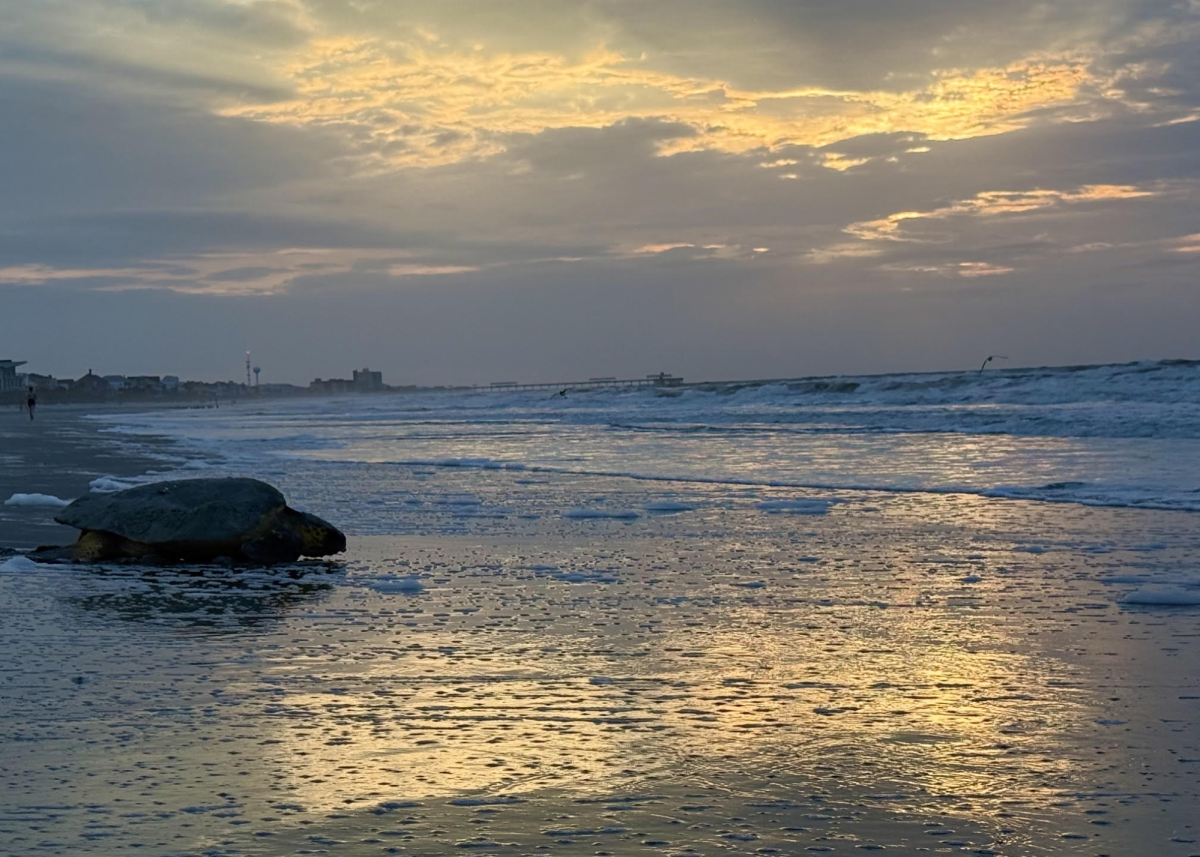
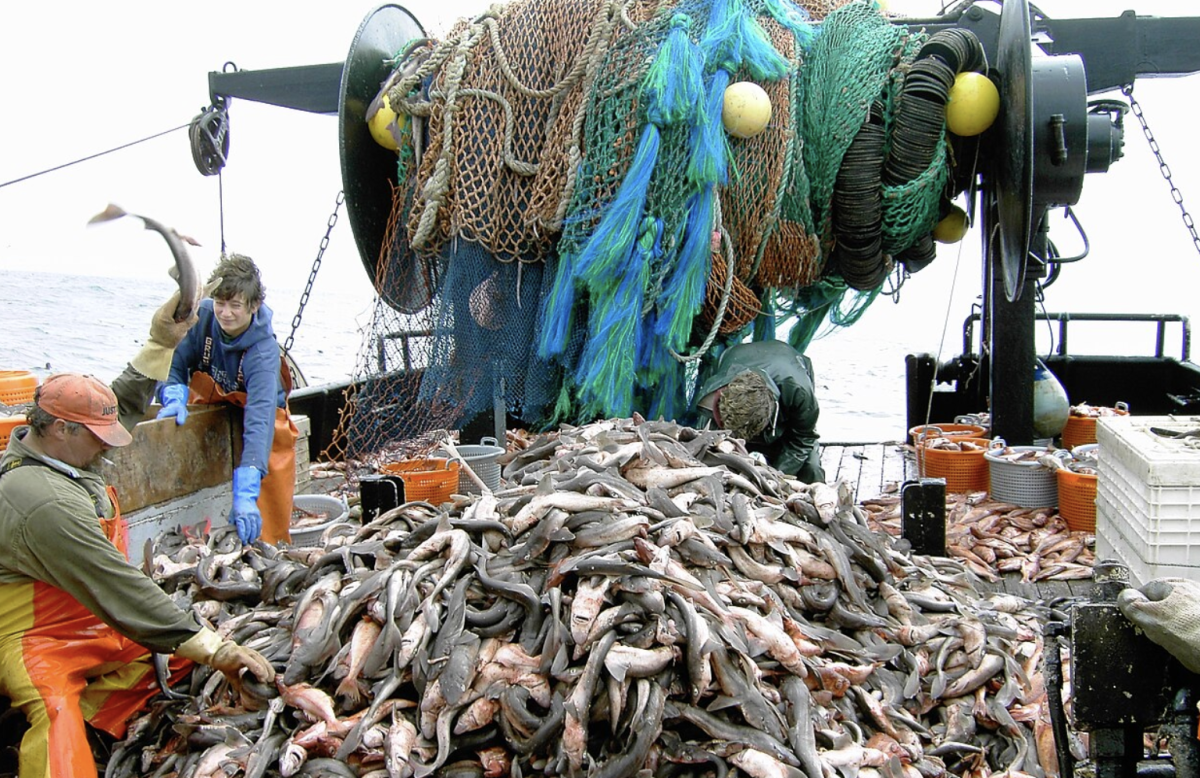
Furthermore, the NOAA warns that bycatch, the accidental capture of unwanted species, can slow the recovery of overfished populations and put animals like sea turtles, whales, corals, and sponges at risk. That means that every net cast into the ocean is capable of creating irreversible damage beyond what appears to be the case on the market. Young fish can be killed before they ever reproduce, endangered animals can be pushed closer to collapse, and entire food webs can be weakened by the loss of species that were never supposed to be caught in the first place. Bycatch turns overfishing into a wider environmental crisis because the ocean is not only being emptied – it is being stripped of the life that keeps it balanced.
Beyond the scope of directly removing fish from the ecosystem, overfishing has led to the destruction of fish habitat as well, especially through the process of bottom trawling. Unlike regular fishing methods that only remove animals from the water, bottom trawling drags weighted nets across the sea floor, swallowing everything in its path. Not only does it contribute immensely to the looming issue of overfishing by scooping untargeted animals from their habitat, it severely damages the habitats and coral reefs of thousands of species. According to the NOAA, unsustainable fishing methods such as these have led to the depletion and serious physical damage of much of the ocean’s coral reefs. This damage is especially harmful because these habitats are not just empty space on the ocean floor; they are nurseries, shelters, and feeding grounds that allow fish populations to rebuild. Once these areas are destroyed, overfished species have fewer safe places to reproduce, making recovery even slower. This adds to the idea of the ripple effect, where if simply one species population is affected, it affects the entire ecosystem consequently. This problem continues to be a thorn in the side of overfishing metrics, as the FAO as previously stated found that every year past 2020, global marine fish stocks continue to be overfished at staggering rates of 35%+, proving that the issue affects more than one isolated region.
The issues of overfishing and bottom trawling go beyond acute habitat destruction and ecosystem disruption – it contributes immensely to the greater global climate crisis. Recent research has shown that bottom trawling releases about 370 million metric tons of carbon dioxide each year by disturbing carbon stored in seafloor sediments. Between the year 1996 and 2025, bottom trawling may have released 8.5 to 9.2 billion metric tons of carbon dioxide, proving to be one of our planet’s silent fuelers of climate change. In this way, bottom trawling does not simply catch fish; it scrapes away the ocean’s ability to recover, destroying the habitats that marine life depends on while adding to the larger environmental pressures already threatening the planet.
Ocean conservationist Sylvia Earle warns, “If you think the ocean isn’t important, imagine Earth without it. No ocean, no life support system.” This quote captures why overfishing and bottom trawling are so dangerous, and it’s a direct call to hold massive seafood companies and retailers accountable for the damage hidden behind cheap fish. Large corporations do not always cast the nets themselves, but they profit from supply chains that depend on industrial-scale fishing, distant-water fleets, and weak transparency. In 2024, Greenpeace’s tuna supply-chain scorecard found that out of 16 major U.S. supermarkets, only two earned a passing score for human rights and sustainability practices in their tuna supply chains, showing how many large retailers still fail to prove that their seafood is responsibly sourced.
The lack of transparency makes the crisis even worse: a 2024 Nature study found that 72–76% of the world’s industrial fishing vessels are not publicly tracked, meaning much of the global fishing industry operates out of public view. This issue is simply not talked about enough, as it serves as an issue on all cylinders – for the species habitats, the consumer, and most importantly, the environment. These companies may advertise seafood as affordable and convenient, but the real cost is paid by collapsing fish populations, damaged ecosystems, and communities left with fewer resources. Like the overproduction and underconsumption that helped fuel the Great Depression, the fishing industry’s obsession with taking more than the system can support creates the illusion of profit while quietly building toward collapse.
While overfishing is always going to be an inherent problem in the fish market, countries’ governments must enforce measurable regulations and rules on the industry to help ameliorate the problem. One of the most effective steps is requiring science-based annual catch limits, which set a legal maximum on how many fish can be taken from a population each year. NOAA reports that the United States has rebuilt 50 fish stocks since 2000 through tools like harvest quotas, size limits, and accountability measures, showing that strict regulation can actually help damaged fisheries recover. Countries should expand and enforce no-take marine protected areas, where fishing is banned so ecosystems can recover. Research on no-take reserves has found that fish populations often become larger, more diverse, and more abundant inside protected areas, proving that giving the ocean space to rebuild works. These policies are not anti-fishing; they are anti-collapse. Just as the Great Depression exposed the danger of producing beyond what the economy could sustain, overfishing reveals the danger of taking beyond what nature can replace. Without firm limits, transparent tracking, and protected recovery zones, the fishing industry risks repeating the same mistake: mistaking short-term profit for long-term stability.