







The author is a high school student at University School in Hunting Valley, Ohio.
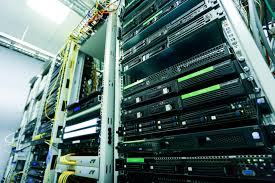
How often does a neighborhood get to say no to a billion-dollar project? On May 14, 2026, Cleveland Mayor Justin Bibb rejected Lakeland Equity Group’s permit for a $1.6 billion AI data center, a massive facility filled with servers that store data, process information, and power computing systems behind artificial intelligence and immense amounts of energy. The decision stopped a plan that could have placed one of the region’s largest technology developments in the middle of Slavic Village. Slavic Village is a residential neighborhood on Cleveland’s southeast side with a history of working- class families, industrial land use, and environmental burden. Placing a data center in a location like Slavic Village would have meant putting heavy electricity demand, infrastructure strain, construction disruption, and possible long-term environmental risks near the people who live closest to it. The rejection shouldn’t make the issue disappear. Instead, it should pose the question of what would have happened if the project was approved.
Behind the polished language of “innovative” and “futuristic” was a facility that would have exhausted electricity, strained local infrastructure, and placed the hidden environmental cost of Artificial Intelligence (AI) onto locals. While the project is off the table for the time being, it reveals a frightening truth: AI is not just stored in the cloud. It runs through physical buildings, power grids, water systems, and communities on the ground, and communities like Slavic Village are asked too often to carry the weight.
When proposing a project to this magnitude, a lot of planning and logistics must take place. The most glaring logistic of all is the grand amount of energy required just to operate it. The proposed project would have required approximately 150 megawatts of power, an amount of electricity capable of powering over 100,000 homes. Furthermore, the project would have required major new power, water, and sewer connections to operate at full scale. The power demand would have come from running thousands of servers, cooling systems, backup equipment, and security infrastructure around the clock. The water demand would likely have been tied to cooling, since large data centers often need systems to prevent servers from overheating. Sewer and drainage connections would also be necessary to handle wastewater and stormwater runoff from a large industrial site. In other words, the burden would not have stayed inside the building. It would have extended into Cleveland’s utility systems, forcing local infrastructure to support the needs of a massive AI facility. The Environmental and Energy Study Institute notes that large scale data bases similar to this scale use up to 5 million gallons of water per day, relatively. The rate at which AI is growing in the United States could add a carbon footprint equivalent to adding 5 to 10 million cars to U.S. Roadways by 2030 according to Cornell researchers. For Slavic Village, the project represented a version of technological progress that came with serious environmental tradeoffs. While developers could present the data center as innovation, residents would have been left to question whether that progress was worth the strain on their neighborhood’s utilities, land, and environment.
Beyond the scope of energy use, the proposed data center raised a deeper question about the power disparity of AI: who benefits from AI and who is forced to pay the price of living beside its consequences? The proposed project was planned for a 35-acre dormant truck yard between East 49th and East 55th streets. That location placed it close to a real neighborhood, not in some isolated industrial zone. Even Mayor Justin Bibb said he wanted to make sure the city was “protecting our residents” and the Slavic Village community. This concern shows the magnitude of following through with projects like these not just locally but internationally as well. The World Resources Institute warns that data centers can affect communities through rising energy demand, pressure on water supplies, air pollution, and climate impacts, all of which were relevant concerns for the proposed Slavic Village center because the project would have concentrated those same pressures in one Cleveland neighborhood. Its massive power demand, possible cooling needs, and required utility connections show how a global AI boom can become a local environmental burden. The Environmental and Energy Study Institute also notes that communities have raised concerns about data center noise and recommends keeping loud data centers away from residential areas through zoning protections. Ultimately, the Slavic Village proposal forced a difficult question: should one neighborhood be expected to carry the environmental weight of a digital industry built for users far beyond Cleveland? Its power demand, cooling needs, utility connections, and potential noise impacts showed how quickly “innovation” can become a local burden when the physical costs are placed near residents.
The unfortunate reality is that many projects like Slavic Village are coming or are already in full swing, leaving a permanent mark of environmental damage. This pattern is already expanding beyond Cleveland. As AI use grows, data centers across the world are demanding more electricity, cooling, and backup power, leaving behind a larger environmental footprint than many users realize. According to the International Energy Agency, data centers used about 415 terawatt-hours of electricity in 2024, or around 1.5% of the world’s total electricity consumption, and that number could more than double by 2030 as AI demand grows.
Taken together, these environmental and infrastructure concerns return to the central question: How often does a neighborhood get to say no to a billion-dollar project? Public resistance to AI data centers is growing immensely, suggesting that the proposed project on Slavic Village was not alone in questioning whether promised investment was worth the local cost. A 2026 Gallup survey indicated that 71% of Americans opposed having an AI data center built in their area, including 48% who strongly opposed it. Just like the proposed project on Slavic Village, the reasons for opposition against these centers is based on concerns in regards to utility costs, pollution, and extensive amounts of power in both electrical and water systems to run it. Pew Research Center found a similar divide: 39% of Americans viewed data centers as harmful to the environment, compared with only 4% who viewed them positively, while 38% believed they would negatively affect household energy costs. These concerns are extremely relevant in Ohio, where growing data center demand helped drive up regional electricity-capacity costs, contributing to a projected increase of about $16 per month for the average residential customer. Taken together, Cleveland’s rejection of this project stood out. The city showed that a large investment did not automatically matter more than the environmental risks facing the neighborhood.
The City of Cleveland’s rejection of the Slavic Village data center was not just the end of one permit application. It was a warning about the kind of future communities are being asked to accept. Mayor Justin Bibb said he was “really concerned about hyperscale data centers flooding our neighborhoods without protections that protect our residents and protect our environment,” a statement that captures exactly why this proposal mattered. AI may promise innovation, efficiency, and progress, but those promises mean little if they come at the cost of local neighborhoods, strained utilities, and environmental damage. Slavic Village, among many other cities, should not have to become the physical footprint of a digital industry that mostly benefits people far beyond its streets. If Cleveland wants a safer, more eco-friendly future, it must make sure that future is built responsibly, sustainably, and with residents’ voices at the center.
Why Cleveland Said No To An AI Data Center © 2026 by Michael Hayek is licensed under CC BY-NC-ND 4.0. To view a copy of this license, visit https://creativecommons.org/licenses/by-nc-nd/4.0/