


The author is a rising junior in Ann Arbor, Michigan
For many high school students, environmental issues can seem latent, or a prospective crisis. However, for members of the Michigan Youth Leaders for Environmental Stewardship (MYLES), those issues have sparked the very policies they are working to implement.
MYLES is a statewide, youth-led coalition of high school students working to advance environmental education and student-led action across Michigan. The group brings together high schoolers from more than 10 school districts, giving young people the opportunity to organize together and speak with educators and lawmakers.
For Varun Swamy, a freshman who leads the environmental club at Novi High School, MYLES is a way to act on his interest in environmental advocacy.
“When I was researching about data centers, I found that they have a huge environmental impact,” Swamy said. “I knew that it’s going to be very hard to regulate them, so I wanted to get people educated.”
That search for education and action led him to MYLES. The organization stood out to Swamy because of its involvement in environmental education and its history of success in getting policy ideas to legislators.
“MYLES brought me and Novi’s environmental group a lot of confidence,” Swamy said. “We are pushing very hard to get a bill through the government and make sure legislatures know about the environmental effects of different issues such as data centers.”
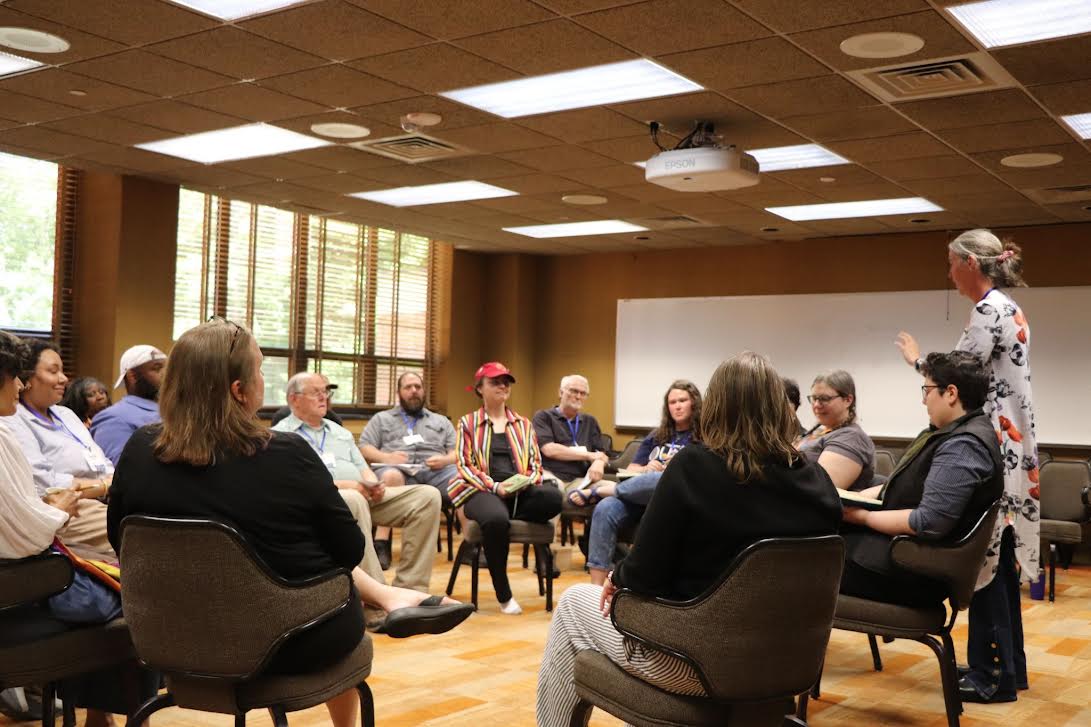
This sense of collective power is central to the group’s mission. MYLES is organized around statewide collaboration, connecting students who may be working on different environmental projects in their own schools but who share a common goal of making Michigan’s schools and communities more sustainable.
Saiabhiram Akkaraju, a rising senior at Novi High School and co-founder of MYLES, describes the group as a coalition focused on solving environmental issues together at the state-level.
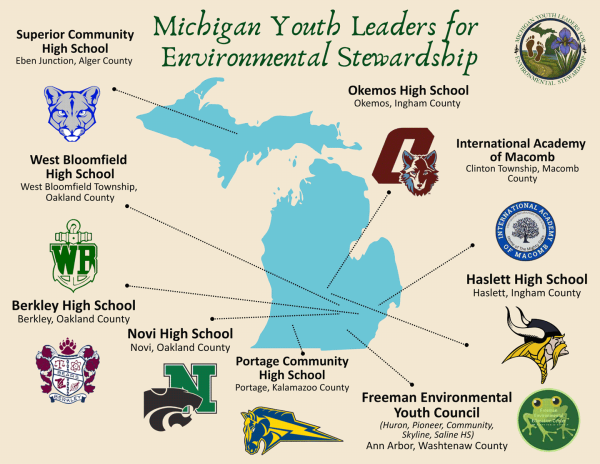
“We have high school environmental clubs and chapters from all across the state, and we’re working together to resolve policy issues for better environmental education, use outreach to help schools get more connected and have resources to be better and start their environmental journeys,” Akkaraju said.
The group’s statewide reach has not been easy to build. Still, MYLES has managed to expand to include more than 10 school districts, with student leaders hoping to continue growing throughout the next school year. Swamy said that growth is one of his biggest hopes for the organization.
“Right now we have around 10 different schools in different areas being represented, but I want all of Michigan to be represented,” Swamy said. “If you have more students involved from different areas, they’ll be able to bring their perspectives and different schools into MYLES as well.”
The organization’s work is divided across areas of policy and outreach, giving students different paths into advocacy. Many are involved in policy work, including MYLES’ push for stronger climate and environmental literacy in Michigan schools.
One of the group’s central initiatives has been connected to a climate literacy legislation. Akkaraju said the work began when MYLES members, with support from adult advisor Denise Keele of the Michigan Climate Action Network, looked for a policy issue that reflected the interests of the group’s members. They found shared interest in House Bill 4961, a 2023 bill introduced by Rep. Julie Rogers which focused on creating an environmental education task force.
“[The bill] helped to make sure everyone in Michigan receives equitable environmental education and gets the opportunities they deserve,” Akkaraju said.
Students in MYLES recognize that learning about climate and the environment should not be dependent on individual school’s resources. They hope all students will receive an education that prepares them for a changing world. Akkaraju found that the bill’s focus on science-based environmental education matched MYLES’ mission.
Through their work, MYLES students have spoken with legislators, actively engaging in legal advocacy and fostering experiences in areas that young people are often told they are too inexperienced in. For Akkaraju, that is part of what makes youth environmental advocacy so significant.
“This is one of the only spaces where I felt that my voice is truly heard and actually accepted authentically,” he said. “In a lot of other spaces, you always get told you’re too young, your worldview is too narrow or you don’t have enough experience. But with the environment, we’re the people that are directly going to feel the result of any change that happens.”
Akkaraju had long been interested in becoming a civic lawyer, but his work with MYLES helped him see environmental law as a possible path.
“With working through MYLES, I really realized that I want to go into environmental law,” he said. “It’s a very fulfilling career for me because it combines my skill set and the passions I have with an issue I want to fight for.”
As MYLES looks toward the next school year, Akkaraju, who will soon be entering his senior year, says he wants to make sure the organization continues after many of its current leaders graduate.
“I want to tackle how we’re going to keep the program going. A lot of our core members are going to be graduating,” he says. “As a senior, I really just want to do as much as possible with my little time here and make sure some of the policy goes through.
Teachers play a vital role by connecting the organization to environmental clubs and inviting student leaders to speak in their schools. For MYLES, the future depends not only on student leaders, but also on the adults who support them. Teachers play a vital role by connecting the organization to environmental clubs and inviting student leaders to speak in their schools. With their support, students are organizing for sustainability and demanding Michigan take its youth’s voices seriously.
As Akkaraju put it, “Someone needs to do this work. So I thought, why can’t it be me?”
MYLES Brings Michigan Students Together in Fight for Environmental Education © 2026 by Youth Environmental Press Team is licensed under CC BY-NC-ND 4.0. To view a copy of this license, visit https://creativecommons.org/licenses/by-nc-nd/4.0/