







The author is a high school senior in Bellevue, Nebraska.
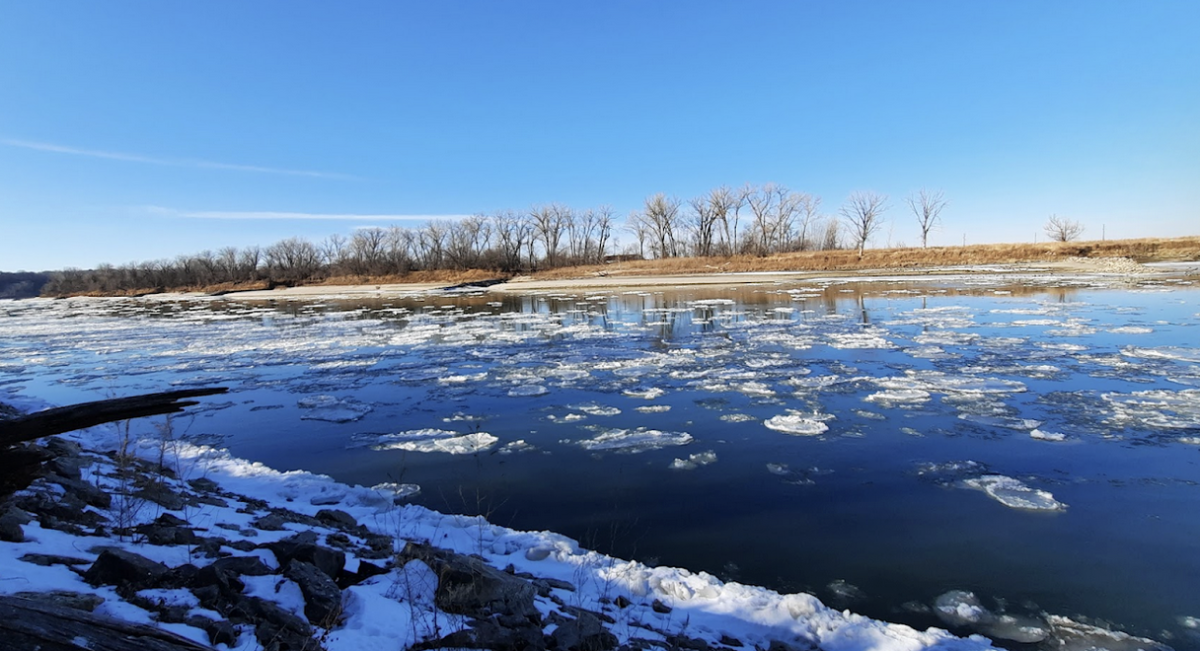
The Missouri River cuts between Nebraska and Iowa, bordering Omaha to the east with its churning, muddy waters. For many Omahans, the river is a core part of the Omaha landscape.
“Growing up in Nebraska, the Missouri river was a part of many of my childhood memories,” Sarah Shu, a senior at Elkhorn South High School, said. “My family would often visit outlooks spots that overlooked the Missouri and we would often spend time at sites near the river such as the Bob Kerry Pedestrian Bridge.”
While the Missouri River is a valued natural resource, it is also under threat from extreme pollution. A report by the U.S. Department of the Interior found that unusual amounts of chemicals such as nitrogen, mercury, and arsenic can be found in the Missouri River. One common source of pollution is stormwater runoff.
“When we built storm sewers… we built these huge pipes underground that would then take this water away from where people were living and where business was occurring, and get it to the streams, and to the creeks and the rivers as quickly as possible,” James Kee Jr., Environmental Quality Control Manager at City of Omaha, said. “Which had a great impact for public safety and property, maintaining property, but it had a detrimental effect to… our resource water in terms of pollution.”
Kee said that while carrying water into the river, storm sewers often collect grease, fertilizer, or other pollutants from the ground. The pollution brought in with stormwater is difficult to pinpoint and prevent because it does not come from one specific source.
“It’s not like you have an industry that’s pumping a bunch of waste into a creek right there and you could point to that industry and say, well, you’re the cause of this,” Kee said. “So this is more of what we call…nonpoint source pollution.”
However, Omaha also faces direct water pollution from industrial and construction sites. Coal ash from plants like OPPD’s North Omaha Station can leak arsenic, lead, lithium, and radium into rivers– chemicals tied to cancer and other illnesses.
“I am aware that waste from the coal plants in North Omaha has been dumped into the Missouri and has led [to] a lot of pollution in the river, and certain chemicals that have been dumped into the river are linked to severe health complications,” Shu said.
Another direct source of heavy pollution is Omaha’s combined sewer system, when sewage and stormwater are mixed. This system can overflow with even a few inches of rain, leading raw sewage to be poured directly into the Missouri River. The City of Omaha estimates that before prevention efforts were enacted, 3.7 billion gallons of raw sewage and stormwater filled the Missouri River and the connected Papillion Creek system each year.
“It’s very troubling to know that raw sewage can overflow into the river,” Shu said, “especially considering how deeply reliant our ecosystem is on the Missouri River for ecological stability and water supply.”
Over the years, the Omaha government has begun to take steps to prevent pollution. Their Stormwater Program, mandated by the Environmental Protection Agency (EPA), regulates construction and industrial sites and aims to educate the public on stormwater pollution.
“I started out in the lab before we had a full-blown Stormwater Program,” Kee said. “And then I became an inspector… when the Stormwater Program started to begin because that’s when we had gotten a permit issued to us by the state of Nebraska for what we call an MS4 permit. It stands for Municipal Separate Storm Sewer System.”
MS4 regulations require large cities to create stormwater management programs. These initiatives include mapping sewer systems, overseeing stormwater discharge, and controlling drain system pollutants.
“The way we kind of break it up is based upon the program elements that we have through our permit from the state of Nebraska,” Kee said.
One of the aspects of Omaha’s Stormwater Program is regulating construction sites. Construction areas are required to take steps to minimize erosion and limit sediment entering rivers.
“Their probably biggest pollutant is sediment,” Kee said. “And so, we permit… that group and they’re required to put together a stormwater pollution prevention plan, that says ‘this is how we’re going to manage this site when we’re building it’, and then we routinely check on them to make sure they’re following that plan.”
The city also monitors industrial facilities, which are similarly required to have a pollution prevention plan. Kee said that some locations create an underground pollution capture system in sewers, while others implement bioretention systems to manage runoff. Bioretention practices mimic natural processes by filtering stormwater through soil and gravel before absorbing it into the ground.
“If it’s a concrete industry or a printing industry or a trucking industry, we kind of gear our messaging based upon the activities that are occurring at those types of industries,” Kee said.
Besides just permits and regulations, the City of Omaha focuses heavily on public education. They encourage homeowners to do things like pick up after their pets, minimize yard fertilization, and redirect downspouts into absorbent green spaces to prevent flooding and water contamination.
“It’s been interesting, in order to see that behavioral change in certain industries and in certain individuals when they, when it kind of clicks and they understand… the impact that they may have,” Kee said. “Either at their home or at their business, and the impact that has to our resource waters.”
Kee points out that keeping local rivers clean is vital for human health and safety. The Missouri River provides drinking water for the Omaha area, and in other water systems like the Papillion Creek or connected lakes, wading and fishing is popular. When the rivers are polluted, drinking water can be contaminated and fish populations can decline, as has been documented in Nebraska.
“Water quality is an important issue,” Kee said. “You know, who wants to go to a lake with their family, and see a bunch of pollutants in there, whether it be plastic bottles or bags or things? When you interact with nature, when you interact with a lake or a pond or the creek, you want it to be clean.”
Regulating water pollution continues to change as new permits get issued every five years. For example, the EPA is now requiring testing for per- and polyfluoroalkyl substances– more commonly known as PFAS, a long-lasting chemical linked to harmful health effects.
“As we learn more about what’s impacting our water quality and what pollutants we can remove, we can do a better job educating the public and finding solutions to those particular pollutants to improve our water quality,” Kee said.
The City of Omaha is planning to continue their work to reduce stormwater pollution for the foreseeable future. The task of treating combined sewer overflow, for example, is estimated to be completed by 2037. Omaha residents can stay up-to-date on water treatment infrastructure by visiting KeepItCurrentOmaha.com.
“I firmly support the movement of reducing overflow pollution into the Missouri,” Shu said. “My biggest hope is that it can be done in a timely and efficient manner.”
Amidst Sewer Waste and Coal Ash, Omaha Continues Plan to Limit River Pollution © 2026 by Youth Environmental Press Team is licensed under CC BY-NC-ND 4.0. To view a copy of this license, visit https://creativecommons.org/licenses/by-nc-nd/4.0/