






This story first appeared in the print edition of St. John’s School in Houston, Texas, on Oct. 3, 2025. Their online publication can be accessed here. This story was a finalist in the annual, 2025, Quill and Scroll contest.
At 12:49 a.m. on July 4, not a single drop of rain had fallen at Jennifer Bowen’s home in Hunt, Texas. At 3:15, Bowen’s adult children, Bo (‘05) and Ellis (‘08), were awakened by neighbors as water approached the front door. They scrambled up the stairs to a cliff behind the house. Two minutes later, the flash flooding began.
Bowen, the Admission Administrative Assistant, was on a riverboat cruise in Serbia with Nikki Vlasek, Senior Associate Director of Admission. While Bowen was aware that it was raining in Hunt, she only realized how bad it was when she got a message from a friend, who asked if Bo and Ellis could help look for his missing mother.
“And then my phone just started erupting,” Bowen said. “I was shocked. Just shocked.”
Bowen considers herself and her children among the luckiest of those affected by the deadliest flash flood the U.S. has seen in nearly half a decade.
The flooding claimed 138 lives.
Contextualizing the Disaster
On the afternoon of Thursday, July 3, the National Weather Service issued a flood watch that included Kerr County and surrounding areas. At 1:14 a.m. on Friday, a flash flood warning was issued for Kerr County specifically. At 4:03, the warning was upgraded to a flash flood emergency, urging people to seek higher ground immediately.
By then, Bo and Ellis had been stranded on the cliff behind their house for over half an hour, during which the Guadalupe River had risen 26 feet and surged as high as 29 feet.
While alarms had been installed following the 1987 Guadalupe River Flood, they were located south of Kerrville — beyond proximity of major regions along the river.
At 5:16, the City of Kerrville Police Department issued its first evacuation warning. As the water rose, 14 helicopters, 12 drones and nine rescue teams were deployed.
On July 5, over 1,000 personnel arrived to help with the search and rescue effort.
Relief Efforts
A week after the tragedy unfolded, Bowen and her children drove to Hunt and surveyed the aftermath. The trip from Kerrville to her house normally takes 30 minutes. That day, it took over two hours.
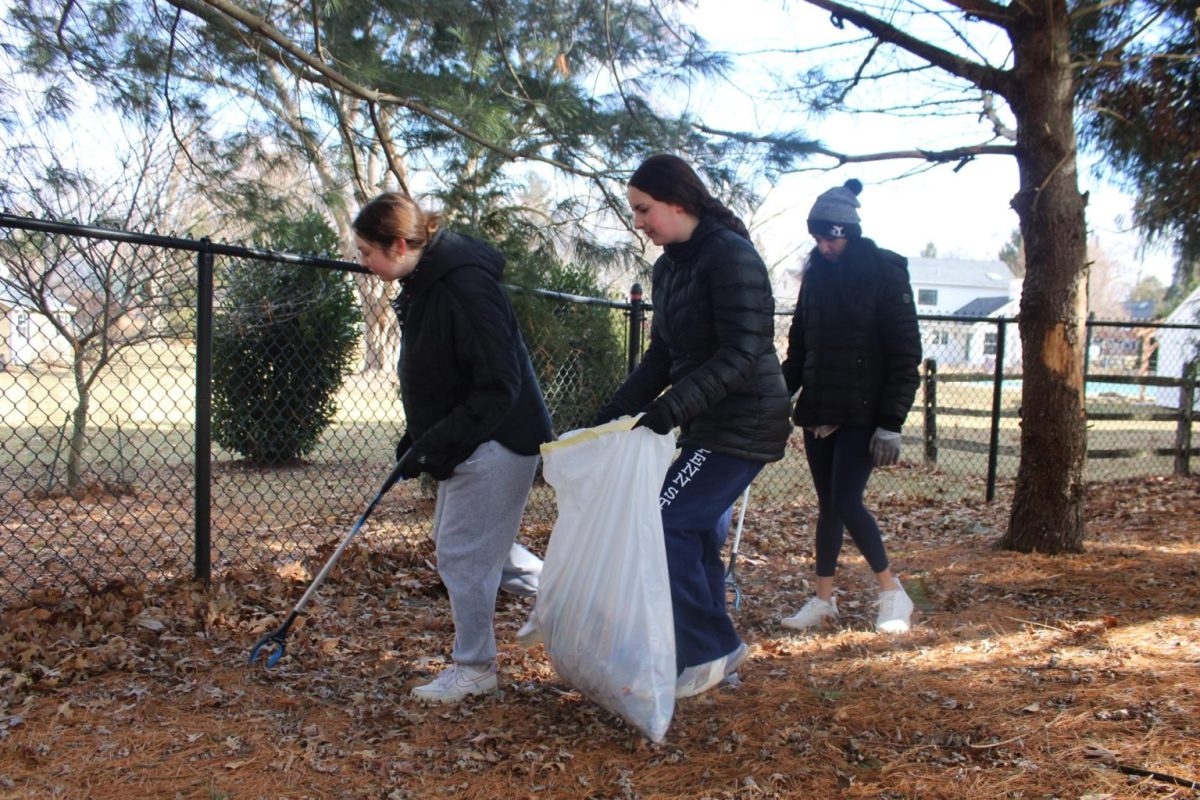
As she neared her home, volunteers crowded along the highway offering food, water and supplies, including gloves, Clorox, mops and brooms, to help residents begin the daunting task of cleaning up. At one point, 30 strangers showed up at Bowen’s house and started clearing away the debris in her yard. Bowen also encountered dozens of people on horseback, accompanied by cadaver dogs, searching for missing persons.
“I’ve never seen so many volunteers in my whole life,” Bowen said. “It was just overwhelming. People are still good.”
In the weeks that followed, the St. John’s community pitched in. Supported by Service Learning Coordinator Claire Nuchtern, juniors Mira Pemmanda and Andy Trejo set up in the Circle on consecutive Saturdays, collecting supplies for the San Antonio River Foundation. In just two days, they filled half a U-Haul with around 50 boxes containing non-perishable food, hygiene products, cleaning equipment, and clothing.
Nuchtern attributes the level of participation to a sense of collective loss. “For a lot of the issues we work on, like food insecurity and homelessness, the St. John’s community isn’t as personally affected,” she said. “But when we have a natural disaster, we’ve all gone through it as a community, and so people are really eager to give back.”
Bowen also saw several H-E-B disaster relief trucks in her area handing out food, water and cleaning supplies. Walmart, Buc-ee’s, Kendra Scott and even Texas-based teams from the NFL, NBA and MLB also pledged donations to area foundations. James Avery has sold over $7 million worth of charms, with proceeds going to the Hill Country.
Processing Grief
Following the disaster, the School’s counseling team met to determine how to support the well-being of community members. According to Counseling and Wellness Coordinator Cynthia Powell, the first step in the School’s response involved consolidating information and making a plan. Head of School Dan Alig emailed families and Upper School students providing resources, and the administrative team organized a prayer gathering on Tuesday, July 8.
Once the community was informed, administrators began preparing for the start of the school year. The counseling office worked with a trauma and grief center to train and support the faculty. They also organized a parent meeting that offered information on processing grief and having difficult conversations with their children.
When the school year commenced, Lower School Counselor Bianca Nuila brought the third-grade students together for a private meeting to offer them additional tools for coping. The initial Chapel services across all three divisions honored those lost in the floods and offered students more resources for support.
Moving forward, the counseling team is responding to all needs on a case-by-case basis. Counselors remind students to reach out whenever they need help. “There is no right or wrong way to grieve,” Upper School counselor Claire Wisdom said. “And our doors are always open.”
Nuila faced a distinct challenge — defining grief and providing support to Class Three, which Margaret and
Ellen would have been in this year. [YEPT Editor’s note: Margaret, aged 8, and Ellen, aged 9, were killed in the July 4 flooding at Camp Mystic, in Kerr County.]
Nuila began counseling at the School when the third graders were in kindergarten. She frequently invites students to lunches and meetings to build genuine relationships.
“It has been a goal of mine to know every student by name, strength and need,” she said. “When they do have those big emotions, they know they can come to me.”
Nuila emphasizes that counselors are not just for trying moments: “I want to be that person there to support the kids all the time.”
More than a Home
Upper School math teacher Caroline Kerr (‘01) grew up visiting Hunt. Her grandparents built four neighboring houses in the late sixties and dubbed them “Kerplunk.” Since then, her family has visited for many special occasions.
Kerr’s extended family was staying at the homes to celebrate Independence Day. In the middle of the night, one of Kerr’s cousins awakened some family members, concerned about the potential severity of the flood. As they checked their phones, they thought the storm would pass, so they went back to sleep. A few hours later, Kerr’s cousin checked his phone again and realized the rain had not let up.
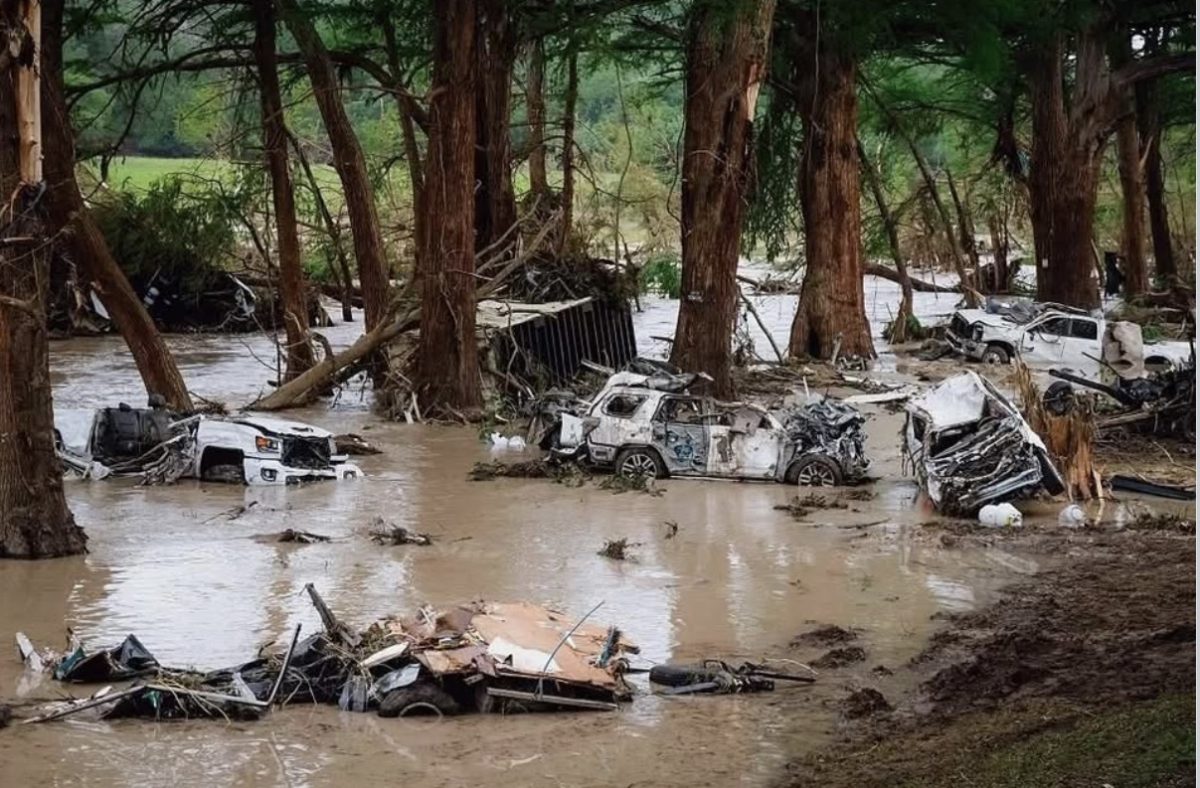
Instinctively, the family rushed to evacuate. Following a path that Kerr’s grandparents had recommended many years ago as the best response to an emergency, they drove up a hill and slept in their cars overnight. When they returned the next day, all the cars they left behind were gone, and one of the original houses had been swept away. The other three homes were severely damaged, but everyone made it out.
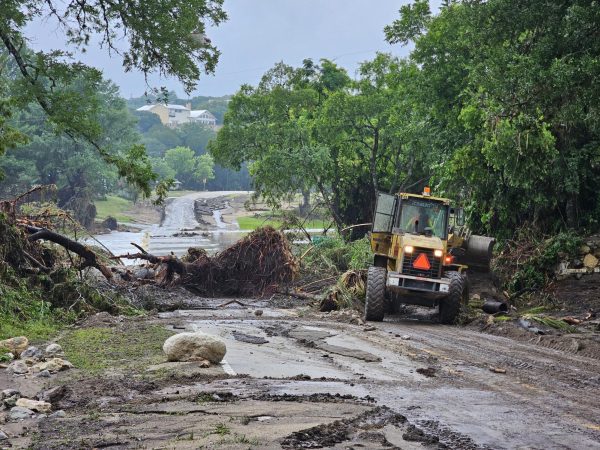
“It was a matter of a few minutes that made the difference,” Kerr said.
Though grateful that her family members survived, Kerr mourns the memories created in the homes.
“The house was a very special thing to my family, and there’s grief over losing something that felt like a place for us to be together.”
Political Fallout
Following the disaster, people rushed to social media. Some offered support; others placed blame.
“There were an unfortunate number of people who, at the very least, expressed that Texas had gotten what it deserved because of its conservative political leanings,” said senior Creighton Garcia, a board member of the Student Political Education Club.
On July 4, Texas Governor Greg Abbott signed a state disaster declaration, and President Donald Trump followed with a federal disaster declaration two days later. On July 21, state leaders convened for a special legislative session, during which politicians raised questions about the lack of a flood warning system and evacuation orders.
In 2017 and 2018, the Upper Guadalupe River Authority applied for state funding for a new flood warning system but were denied. They submitted grant applications again in 2024 but could not proceed “because of the low state match for applicants’ funds,” according to The Texas Tribune. Yet when an unrelated project fell through and left the River Authority with $3.4 million in reserve funds, city leaders chose to use the surplus to lower taxes rather than fund a system — a decision that has heightened scrutiny of both government officials for their hesitancy to fund a system and the River Authority for its priorities.
“Trying to pinch pennies when it comes to something like early, advanced warning systems for weather events, especially in areas like Texas that are prone to flash floods, can be enormously devastating for communities,” Garcia said. “I would hope to see more of a push for updating weather service systems and for not being afraid to spend money on that.”
The insufficient response also cast a critical light on the Trump Administration’s budget cuts to the National Weather Service, which manages the country’s data and infrastructure system and is the official source for issuing warnings during critical weather events, and the Federal Emergency Management Agency, which provides direct government and financial aid to coordinate disaster preparation and response.
“What could happen without the funding, and could we see something like this on an even larger scale, like with a hurricane hitting a vulnerable community?” Garcia said.
In the aftermath, the tragedy became embroiled in partisan policymaking. During the special session, Republicans proposed a plan to redistrict the Texas congressional map, which would add five new GOP seats ahead of the 2026 midterm elections. In protest, Democrats left the state to stop the House from voting on the map. Accusations flew — Republicans were blamed for using the flooding as a cover to advance their own agenda while Democrats were criticized for abandoning flood victims and bringing the legislature to a standstill.
“It’s unfortunate that it became so political,” Nuchtern said. “Whether you are a Republican or a Democrat, if a natural disaster hits, it’s going to affect all of us.”
School counselors think of instant politicization as less of a conscious decision than an impulsive coping mechanism.
“In the face of trauma and tragedy, we’re reminded of how unpredictable the world is,” Wisdom said. “And I think some of that politicization is our brains looking for control. That might feel like a helpful way to make sense of loss.”
Looking Forward
The July 4 flood is the most recent in a string of deadly flooding events in the last century. In 1932, 10 bodies were recovered following the flooding of the Guadalupe. In 1987, a second flood swept away 43 people, 10 of whom died. Almost 12 inches of flood water caused the river to surge 29 feet within a few hours.
Senior Adaline Thompson, president of the Environmental Coalition of Students, attributes the unprecedented severity of the 2025 flood to climate change.
“A flood this powerful hasn’t happened in decades in that area,” Thompson said. “It shows we need to think about what we’re doing when we are contributing to climate change and think about all the lives taken.”
The week before the flood, the Trump administration shut down the website for the U.S. Global Change Research Program, which contained crucial data on climate change. The weather service also began reducing weather balloon operations due to a staffing shortage.
“I don’t know if that impacted the lack of response for this specific flood,” Thompson said. “But if we continue defunding things that track how climate change impacts weather, it’s just going to make more of those storms badly impact our communities.”