



The author is a rising sophomore in Michigan.
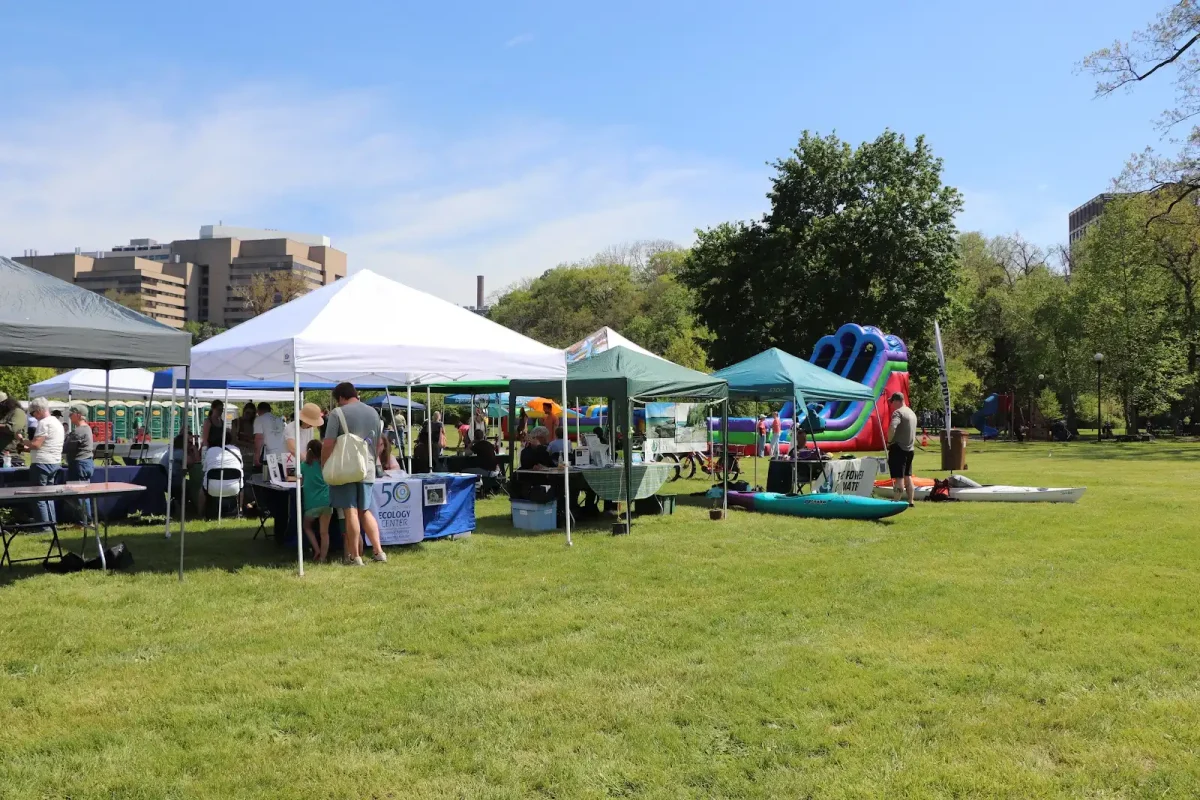
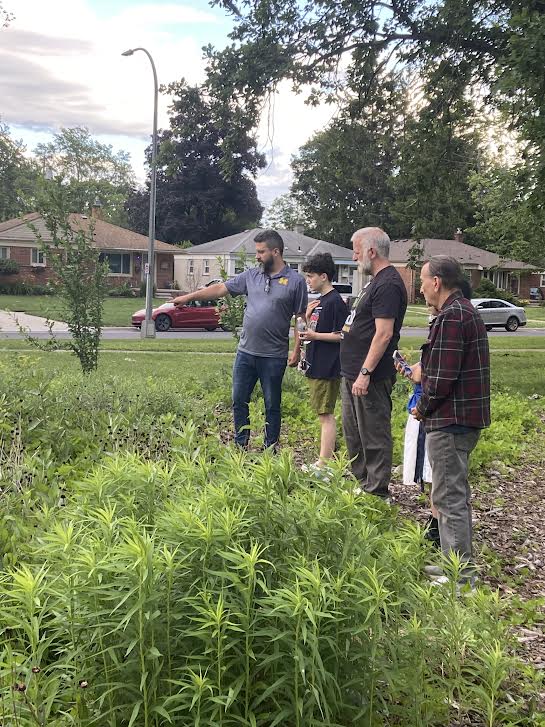
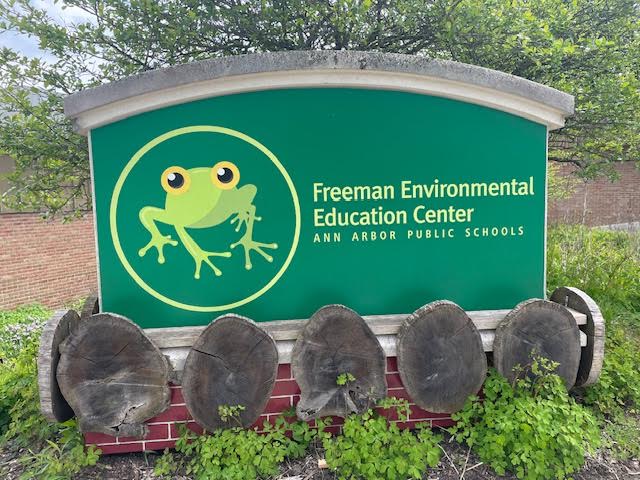
Saturday, May 9, 2026, the Freeman Environmental Education Center in Ann Arbor, Michigan was buzzing with activity. As part of the Freeman Environmental Youth Council’s spring festival, some attendees transplanted seedlings into milk jugs, while other kids made mason jar bee “hotels,” an activity so popular that the supplies had already run out midway through the festival. I watched children kneel on the grass to participate in a trash-sort relay as they learned about recycling rules. One woman representing Project Grow, an organization in Ann Arbor that facilitates community gardening spaces, wore dangly daisy and strawberry earrings as she made seed balls with dirt. A crowd gathered around the Leslie Science and Nature Center’s booth; they had brought along their well-trained hawk, who perched atop a staff member’s shoulder. In the forest surrounding the grass lawn outside the Freeman Environmental Education Center, volunteers worked to pull garlic mustard, an invasive species found throughout North America.
The Freeman Environmental Youth Council was launched in 2019 and began hosting their annual spring festival in 2023. In 2026, they held their third annual festival. The organization brings together high schoolers in Ann Arbor to work towards environmental sustainability and education through youth advocacy.
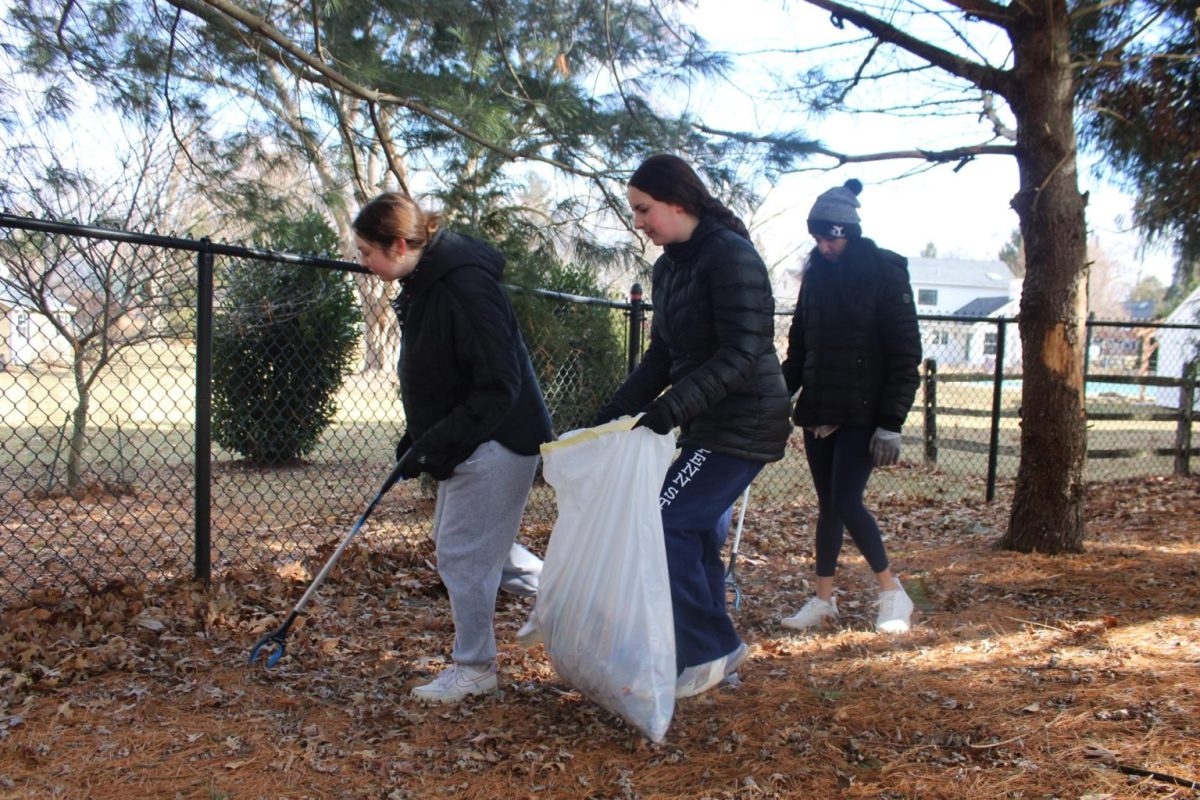
The council is divided into three subcommittees: advocacy, service and education. The advocacy group focuses on political issues, communicating with state representatives and climate organizations to advocate for policy change. The service subcommittee does hands-on work including trash pickups at public spaces, tree plantings, and school waste audits. This is also the group that takes the lead in planning the youth council’s festival. The education committee visits elementary schools to help raise a new generation of climate activists.
A high school junior in Ann Arbor, Felix Brown has been a dedicated member of the council since he was a freshman.
“As a little kid, I wanted to put up signs in my neighborhood that said ‘Climate change is real!’” Brown said.
While Brown isn’t sure what sparked his passion for the environment, he’s always loved animals. Recognizing the negative impacts that climate change has on wildlife, Brown decided to join the council and become part of the service subcommittee.
At the festival, Brown had the experience of running the mason jar bee hotel stand, where kids painted cans to hang up in their backyards. According to Brown, many parents were interested in learning more about bees and pollinators, and some admitted that they had never realized how vital bees are to our ecosystem.
“It’s great knowing how interested people can be,” Brown said. “It felt really good to know that all these people were going to take these things that they made home and make all these small changes and differences that’ll add up.”
Next year, Brown will have the opportunity to step into a leadership role on the council. He hopes to recruit as many passionate new students as possible.
To ensure the right fit for the program, the council and its adult liaison Coert Ambrosino review applications carefully, hoping to find students whose passion will be a right fit for the program. Through a blind rating of applications and a short interview round via Zoom, returning council members review all applications holistically to create a strong representation of the Ann Arbor Public Schools’ student body.
“Get the whole community involved”
A recently graduated high school senior in Ann Arbor, Olivia Kreger is completing her final year on the youth council. She grew up volunteering with her best friend’s parents, who are both invested in water safety and the environment. This sparked her initial interest in the environment. For her first two years on the council, Kreger participated as a member of the education committee.
One of Kreger’s favorite memories is visiting an elementary school, where the council members taught fourth and fifth graders about climate change through an educational game about the basics of recycling, trash and composting.
“After we left, it inspired the whole school to start doing their own composting event, as well as having the fifth graders teach all the younger grades below them,” Kreger said. “It was a really cool opportunity to get a whole community involved.”
Kreger believes that by participating with the youth council, she’s had a far greater impact than she would have if she had just joined a school club. She has had the chance to interact with important political leaders in Michigan, connecting with people in places of power that she wouldn’t normally talk with.
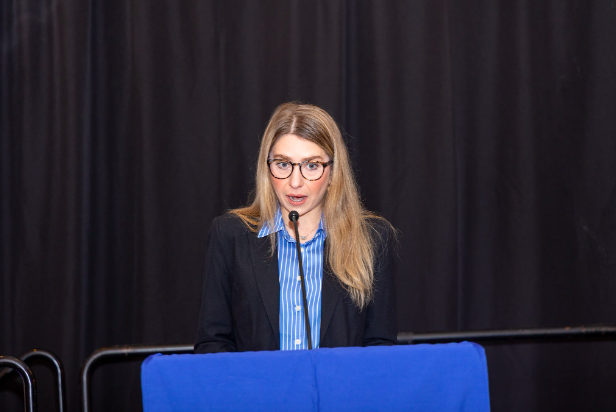
In addition to the booths at the festival, which showcased local environmental organizations, Freeman welcomed several guest speakers. Elijah Morrow, a junior in Ann Arbor and a member of the youth council, discussed “nature’s potential.”
Morrow discussed “shifting baseline syndrome,” which, in Morrow’s words, is the “phenomena of ‘new normals’ replacing our ideas about what nature’s potential truly is.” He mentioned that fireflies, a much-anticipated highlight of Michigan summers, are now at risk of extinction in the United States due to pesticide usage and habitat loss.
“Slowly, over decades, we have seen less and less fireflies, and we now consider our current number of fireflies ‘normal,’” Morrow said. “When our generation has kids, we will likely be telling them about how much more fireflies we used to have.”
“Let’s go sign up!”
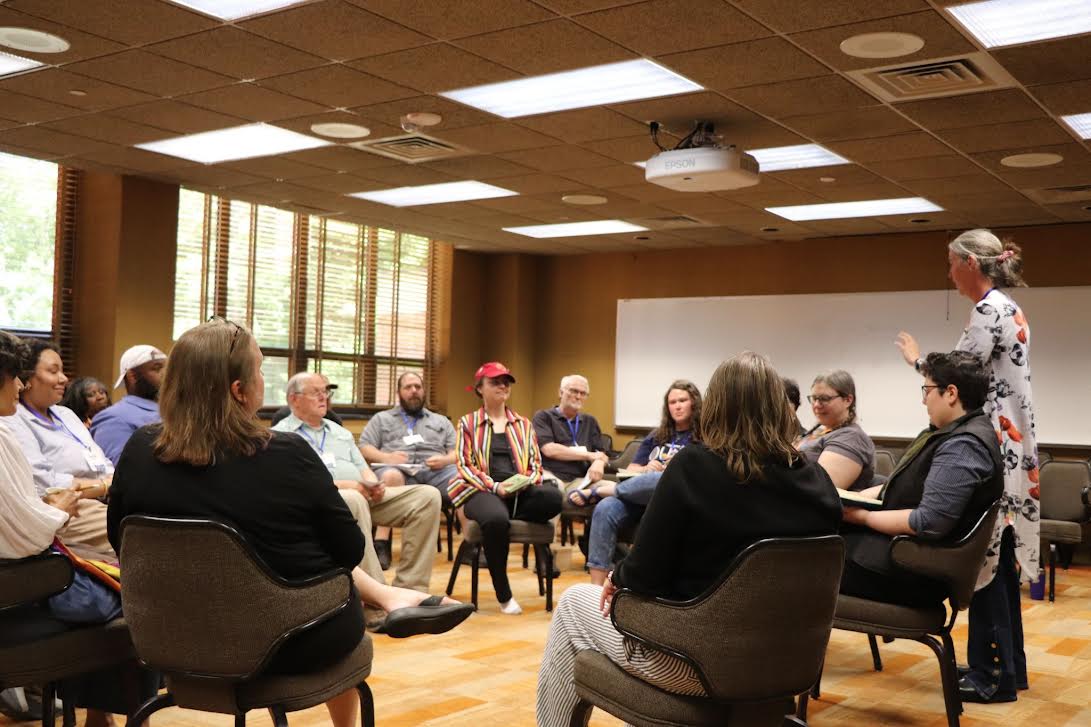
Following Morrow’s presentation, Kim Korona, the VegMichigan Program Manager, spoke about the impact the food industry has on the environment. Agriculture drives roughly 80% of deforestation in tropical regions. Thirty-three percent of total greenhouse gas emissions come from the food industry, with beef production the number one greenhouse gas emitter. The high demand for beef fuels mass breeding, which in turn causes greater habitat destruction. Two-thirds of the cropland in the United States is used for animals. While Korona shared many dispiriting statistics, she made sure to bring the presentation back to how people in Ann Arbor can help. If you want to host a plant-based party, for example, representatives from VegMichigan will come to your house to talk about the importance of plant-based eating. They’ll also bring free samples of vegan food. She wrapped up the presentation by sharing VegMichigan’s 30-day plant-based pledge. The two teenage girls in the presentation audience looked at each other and said, “Well let’s go sign up!”
One of the final presentations was given by a member of A2Zero, an organization aiming to create a “just transition to community-wide carbon neutrality by 2030,” according to their website. As the speaker admitted to an audience of mostly adults, this presentation about the benefits of geothermal energy was geared towards younger kids. “Earth is like a giant hot potato. The inside is always hot!” he said. One slide said “POP QUIZ OH NO” in capital letters, engaging the audience in a slightly less serious manner. The entire audience stretched up and down to demonstrate how geothermal energy works.
Nearing the end of the festival, members of the youth council did a story read-aloud for younger kids. Participants walked around carrying small seedlings in their hands.
In the fall, the youth council will continue working towards their current campaign goal: reducing idling of internal combustion engine vehicles on school campuses.
In a year’s time, another spring festival will roll around, marking another year of youth advocacy for the Freeman Environmental Youth Council.
Ann Arbor’s Youth Environmental Activists © 2026 by Youth Environmental Press Team is licensed under CC BY-NC-ND 4.0. To view a copy of this license, visit https://creativecommons.org/licenses/by-nc-nd/4.0/