




Penny Kim is a Sophomore in Colorado and a director for YEPT.
Sustainability. We hear that word a lot in relation to the environment. Shifting towards renewable energy to sustain our natural resources. Rewilding to sustain our ecosystems. Conserving water to sustain food supply. Yet, the most important aspect of sustainability is sustaining the movement of people who fight to protect our planet.
We need to ensure that there will be people to carry on the work that we do today, tomorrow, and long into the future. Environmental protection dies—and climate change wins—the day there is no longer a generation willing to stand up against capitalism and cruelty to fight for our home planet.
The question then becomes: How? How do we raise the next generation with the environment in mind? How do we ensure our climate movement is sustainable?
Education and exposure are the best ways to get young people passionate about protecting the environment. Yet equally as important is reframing conversations around climate change through a lens of love rather than fear.
I asked Elise Sankel, head of the Outdoors Club at Kent Denver School in Colorado, why she is passionate about the environment.
“I’ve spent a lot of time outside, and I just love it,” Sankel said. “There are so many opportunities that come with it.”

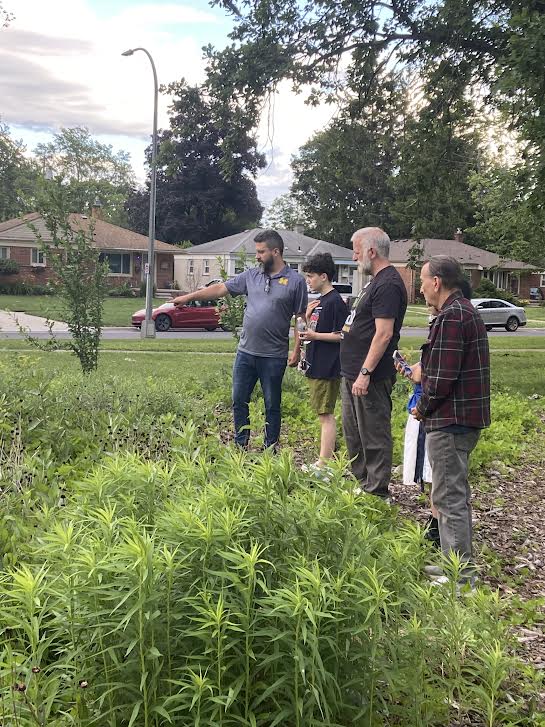
For this author, spending time outdoors and learning about climate change was what made me care about the environment. I attribute that in part to growing up in the wonderful state of Colorado where nature is ingrained in the culture, in the economy, and in everything. It allowed me to see the beauty in nature and the reasons we should protect it. Later, learning about the danger we are in if we don’t protect the natural world sparked my journey to becoming a passionate environmentalist.
“Education is the most important thing in any activism,” Molly Callaway, Sustainability Specialist at Kent Denver School said. “Making sustainability a day-to-day conversation and making environmental activism a day-to-day conversation is my biggest goal.”
Education about climate change goes a long way. A study conducted at San Jose State University found that many students who take a climate change course in college implement lifestyle changes to emit less carbon dioxide later on in life.
“The reduction was about three tons of carbon per year, which is a similar reduction to having an electric car or putting solar panels on your roof,” Professor Eugene Cordero, one of the lead researchers, explained.
“There’s only a very small group of people that are actively reading research papers and actively looking to expand their knowledge about environmentalism,” Callaway said. “Education was a really cool way to use what I had learned and what I feel passionately about in a way that other people can also learn and don’t need to necessarily seek out.”
How we educate youth is just as important as it is to educate them in the first place. A staggering 59% of people aged 16 to 24 report feeling such strong negative emotions in regards to climate change that it impacts their daily life.
“I just feel kind of guilty,” 18-year-old Sankel said. “We haven’t been protecting our lands like we should. And I feel a responsibility since I spend so much time outside that I should also be trying to protect it.”
Unfortunately, provoking fear and guilt is a very common method when educating people about the climate crisis. This has led to a major spike in climate anxiety—distress about the impacts of climate change. Thirty five percent of American adults report feeling worried about climate change at least once a week.
“When it comes to environmental education, teaching [people] to be scared of what’s going on does more harm than good,” Callaway stressed. “Being able to wholeheartedly experience being outdoors and why it’s so important and why you should love and care about our environment is a much better approach for education than the fearmongering about our current situation.”
However, trying to lie about the current situation to assuage concern is also the wrong approach.
“We have to be telling the truth about this,” Harriet Shugarman, founder of the Climate Mama blog and author of How to Talk to Kids about Climate Change, said. “It may seem scary, but actually it’s not, because once you have the knowledge, even if you’re a preschooler, we share the story in a different way, but we can still share the story and the successes.”
There are support networks to help people suffering from climate anxiety, such as the Climate Psychiatry Alliance, the Climate Psychology Alliance of North America, Climate Junction and the Climate Mental Health Network. These organizations educate mental health professionals and the public about the impacts of climate change on mental health. They seek to create a space for conversation about emotions surrounding the climate and connect users with mental health providers that have been trained on how to mitigate climate anxiety.
We must adapt to having climate change present in our lives, as it is a very pervasive issue.
“Every job is a climate job,” Shugarman asserted. “Whether you’re an actor or an artist or an educator or an engineer, we have to learn how to incorporate what’s happening in our world around us and make that part of the climate and be climate aware.”
Getting youth involved in environmental protection is essential to sparking climate action.
“Young people can be much more direct in demanding solutions, and come and have new and different ideas,” Shugarman emphasized. “We need youth voices in policy, and not just to have a seat at the table and be seen, but we need to listen.”
Youth involvement is vital for continuing the climate protection movement long into the future. The most effective way to get young people interested in environmental protection is through education and open communication.
“We are all going to be living the climate crisis for the rest of our lives,” Shugarman said. “We can’t solve it because of the geological scale of what we’ve created in the world. It can’t get better in our lifetime, but it doesn’t have to get so significantly worse if we take action now. So as a parent we need to talk about it and we need to take action as families.”
Sustaining the Climate Movement © 2026 by Youth Environmental Press Team is licensed under CC BY-NC-ND 4.0. To view a copy of this license, visit https://creativecommons.org/licenses/by-nc-nd/4.0/