









A 2024 Colorado Senate Bill required a report by the Colorado Energy Office aimed at exploring facilitating new energy projects in the state. After more than a year, the report was finally released. I read it so you didn’t have to.
Background
This report is incredibly important to better understand how Colorado can meet its goal of running on 100% renewable energy by 2040. It also comes at a time when the federal government has made it clear that it will not help facilitate a transition to clean energy. The report’s insights into Colorado’s unique energy landscape will help the state determine how to manage its own clean energy transition during the Trump presidency. The report emphasizes that Colorado must heavily increase wind and solar production and capacity. However, at a time when the state desperately needs to lower emissions and invest in renewables, individual counties have created legislation that makes it harder to establish solar projects and meet climate goals.
The Report’s Findings
County legislative branches determine the land use regulations, and according to the Energy Office’s report, “high-profile denials of utility-scale solar projects highlight the complex and sometimes contentious nature of local permitting processes.” The report makes clear that some counties’ land use rules are at odds with Colorado’s clean energy goals.
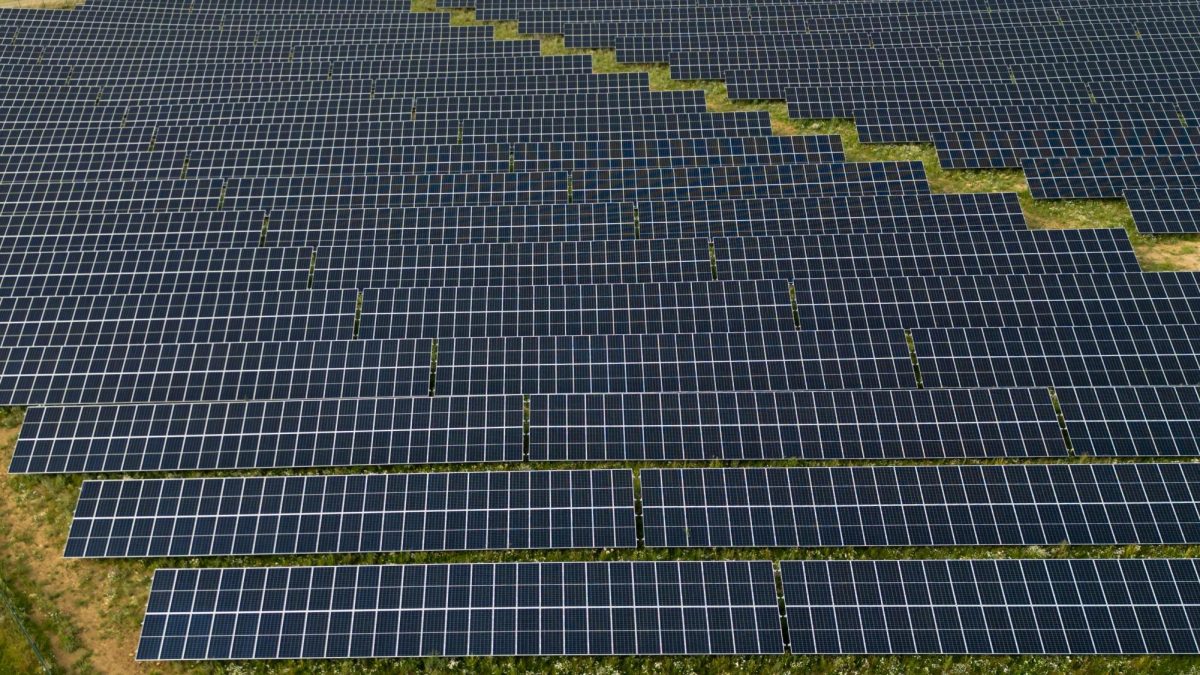
Colorado is facing rising energy demands while planning to retire all coal-fired plants by 2031. The clear solution is to increase energy production by increasing solar and wind energy output. In fact, Colorado’s energy office estimates that the state will need 11,000 megawatts (MW) of wind generation and 12,000 MW of solar. This will require tripling current wind capacity and quintupling current solar capacity.
Increasing solar and wind production would reduce Colorado’s greenhouse gas emissions by 94% and cost $56.1 billion. Achieving a 100% reduction in greenhouse gas emissions would cost another $7.5 billion. Increasing solar capacity is estimated to require 82,500 acres of land, while wind would take up 17,000 acres. New transmission lines would need 10,000 acres, and battery storage 560 acres. This totals to 110,000 acres of land or 0.17% of all land in Colorado.
However, due to Colorado’s unusual landscape and uneven population distribution, these new developments would not fall evenly across all counties. Current wind farms are only located in nine out of 64 counties, and proposed development totals about 14 counties.
Solar is more dispersed than wind. However, regulations are still being finalized by many counties. Currently, 38 counties have solar land use regulations, some of which the energy office defines as “restrictive.” In fact, the Energy Office’s report found solar projects in nine different counties stalled due to public opposition, wildlife issues, concerns about the loss of farmland, or failure to comply with local rules and plans. While many projects are stalled, dozens of solar projects have still been approved by local governments, with those facilities covering approximately 21,000 acres.
Solar and wind aren’t the only aspects facing pushback. Two Colorado counties recently rejected Xcel Energy’s proposed route for its $1.7 billion Power Pathway high-voltage transmission line. According to Xcel, the looped line will bring wind and solar power from the Eastern Plain of the state to the more populated Front Range. Xcel has requested that the Colorado Public Utilities Commission use its power to overrule the counties and allow the Power Pathway to be built.
Controversy
The report is not without controversy. County officials have claimed that the report is unnecessarily antagonistic to counties without a clear reason, while the method of survey that underpinned the report was also criticized; fewer than half of Colorado’s 64 counties were surveyed.
While some criticism of the report may be legitimate, the idea that Colorado needs to massively expand wind and solar energy holds. That should be the state government’s main takeaway from this report, and is also what should guide its future climate decisions.
Colorado needs expansion to meet clean energy goals © 2026 by Youth Environmental Press Team is licensed under CC BY-NC-ND 4.0. To view a copy of this license, visit https://creativecommons.org/licenses/by-nc-nd/4.0/