





The author is a sophomore at Community High School in Ann Arbor, Michigan.
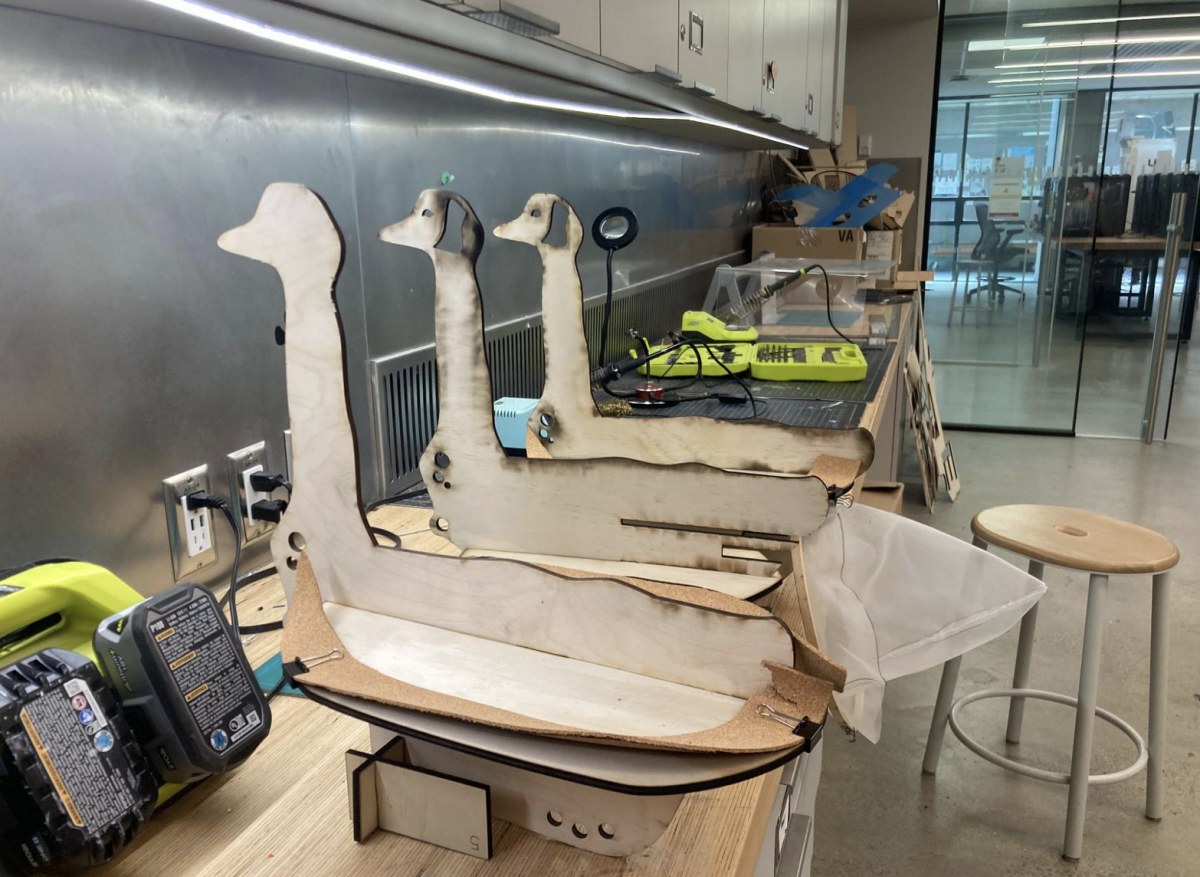
At the University of Michigan’s North Campus, engineering students are hard at work. Through the help of teachers such as Anna Stefanopoulou, a professor in the Department of Mechanical Engineering, these students create and test prototypes to better improve climate studies.
Stefanopoulou has been a professor at the university for over 25 years. During her time at UofM, she has switched between researching engines, fuel cells and batteries, always looking for a cleaner and more cost-effective way to decarbonize vehicles. Recently, she has taken up the challenge of researching electric vehicle engines.
Because electric vehicles (EVs) leave a smaller carbon footprint, Stefanopoulou believes that widespread EV use could greatly benefit the climate. However, they tend to be more expensive than the alternatives and used EVs aren’t always the top choice among customers due to their quality being perceived as unreliable. She also mentions that Michiganders prioritize practical cars in the deep of winter and are hesitant to trust EVs.
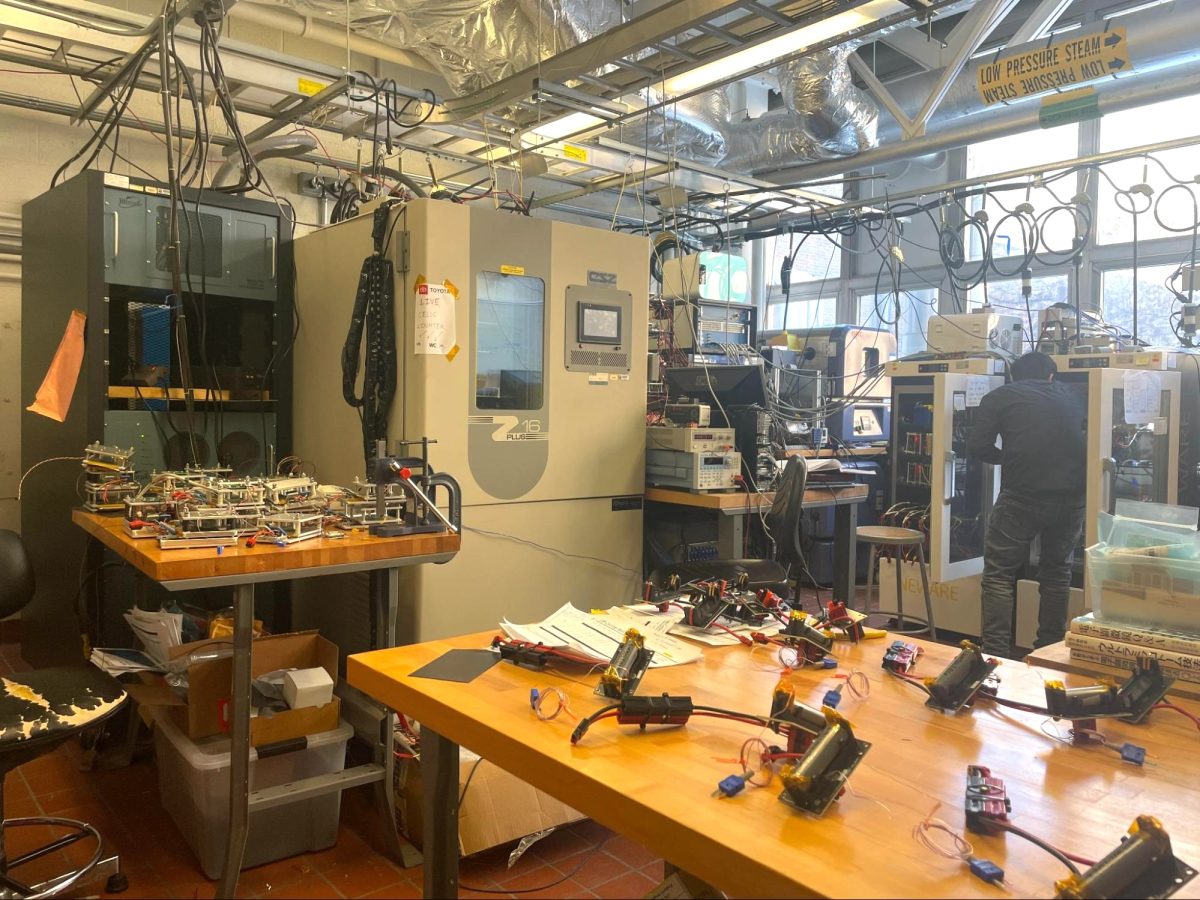
In the lab, students are focused on making EV batteries safer and more reliable. To do so, they run EV engines through a series of tests focused on sustainability and battery decline to better understand the limits and possibilities of these vehicles. When batteries charge, they swell, and when they discharge, they contract. Students make sensors to measure these patterns in order to predict future battery degradation and battery safety within the vehicles.
While these efforts can hold promise of impact, Stefanopolou warns that alone, they likely aren’t enough.
“The intense cold patterns we experience now, the summer heat waves, along with devastating fires and floods,” Stefanopulou says, “make us painfully aware that we might be too slow and too late in managing climate change.””
Michigan Graduate student Xin Hui Ooi has been working on a project surrounding battery energy solar systems (BESS) with help from Stefanopoulou and other students. Battery energy solar systems work by storing energy produced by generation plants through batteries.
Like all projects relating to energy usage, a malfunction in the system can pose a great safety risk. Ooi has been focusing on improving the safety of BESS so they can have more widespread use and efficiency.
To address the safety risk, Ooi and her team have begun working on a mobile gas sensing system that uses a fixed point sensing robotic platform. Because small levels of gasses can be released in the early stages of cell failure, this mobile system catches concerns before major problems arise. This would greatly improve the reliability of battery energy solar systems, allowing for higher levels of usage.
BESS could be crucial in using renewable energy sources to their full potential. Their ability to store energy makes them especially appealing to researchers like Ooi. While the sun may not be out for 24 hours a day, solar panels can capture this energy in the daylight and store it. The same goes for other sources such as wind power. While the ability to create wind energy relies on the weather, the energy produced under windy conditions can be stored for future use.
“In the future, as BESS adoption increases, we may see large utility-scale systems stabilizing regional grids with high levels of wind and solar, alongside smaller systems that support homes, microgrids, and electric vehicle charging.” Ooi said. “At the same time, advances in diagnostics and fault detection will make these systems smarter, safer and more reliable, enabling wider deployment. As we move toward a more sustainable future, energy storage will be one of the key technologies making that transition possible.”
Shifting away from gas-fired power plants to sources of renewable energy has the potential to reduce greenhouse gas emissions and air pollution. By making BESS more reliable and safe, Ooi and her team are paving the way for a sustainable future in the world of renewable energy.
Making EVs and Batteries Safer and More Accessible © 2026 by Youth Environmental Press Team is licensed under CC BY-NC-ND 4.0. To view a copy of this license, visit https://creativecommons.org/licenses/by-nc-nd/4.0/