










Nitrate. Arsenic. Uranium.
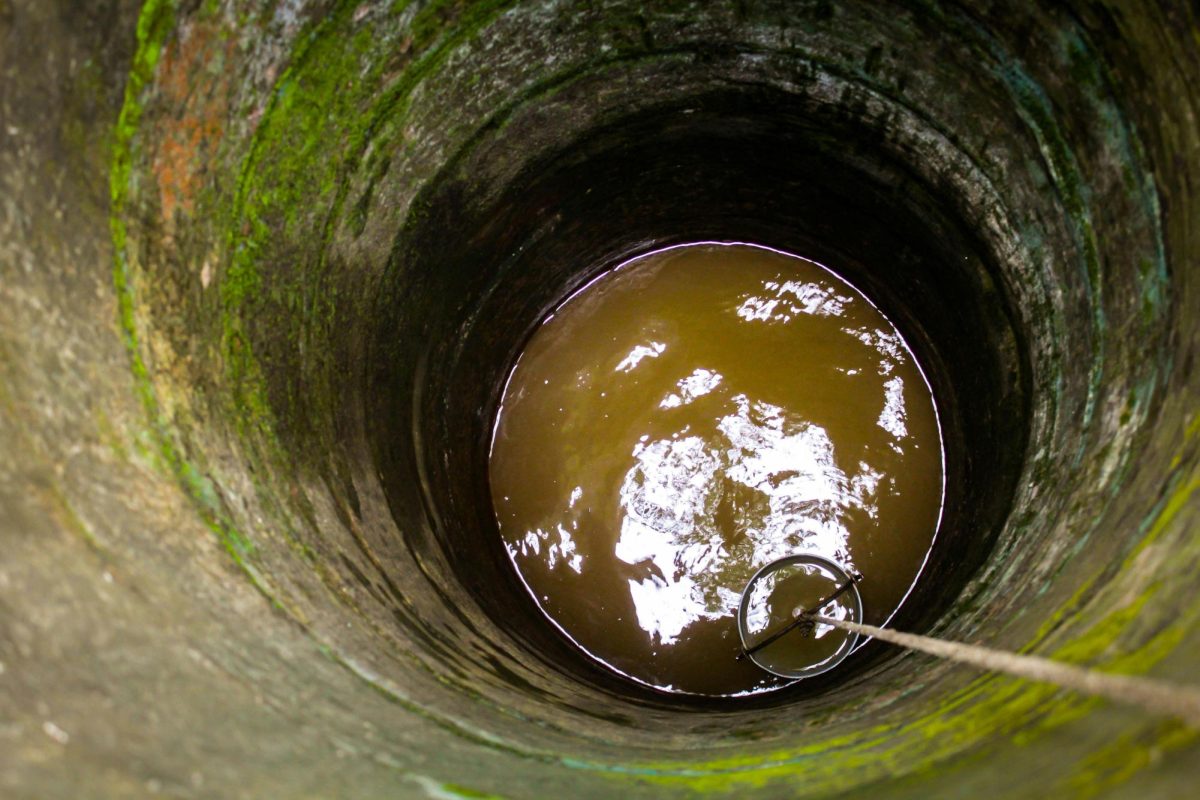
These are just some of the many chemicals that enter private wells in agricultural areas across the state of Nebraska. In Nebraska, over 360,000 residents get their drinking water from private wells, none of which are required to be tested for pollutants.
“Those wells are not regulated under the Safe Drinking Water Act,” Dan Snow, director of the Water Sciences Laboratory at the University of Nebraska-Lincoln, said, “and they tend to be ones that are situated adjacent to agricultural land, and that land contributes pollutants to the local groundwater.”
Snow points out that Nebraska’s groundwater is often close to the surface, and pollutants drain easily through the state’s sandy soils. Nitrate, in particular, is a common contaminant that stems from agricultural fertilizers seeping into the soil.
“It’s really kind of the worst case scenario for nitrate contamination… in Nebraska,” Snow said.
The Nebraska Department of Energy and Environment reported in a 2025 study that 17% of private wells across the state exceed recommended nitrate levels of 10 mg/L or less. Nitrate and other pollutants can contribute to health problems like increased cancer risks, and, in infants, methemoglobinemia. Also known as Blue Baby Syndrome, this condition occurs when nitrates are converted to nitrites that block red blood cells from carrying oxygen.
“We know what causes that [Blue Baby Syndrome],” Snow said. “Nitrate gets reduced to nitrite, and then nitrite then interferes with oxygen uptake in blood.”
Snow also points out the effects of other pollutants like arsenic, which can increase the risks of cancer and diabetes, and uranium, which can lead to kidney toxicity. Arsenic has historically been used in pesticides and uranium can be found in synthetic fertilizers.
“I think what’s really interesting and important for us to study is all the other contaminants besides nitrate,” Snow said. “When you start mixing nitrate with other contaminants, like arsenic and uranium… they could actually contribute to more intense human health effects than any one contaminant alone.”
Snow has been studying water pollution for decades, and in 2017, he decided to create a program to test private wells in rural Nebraska. But he didn’t bring in scientists or professors. He let high school students do the testing.
“They get a taste of real field work,” Katy Dornbos, a science teacher at Norris High School, said. “It’s a very good experience for them.”
The program, run through the University of Nebraska’s Water Sciences Laboratory, is called “Know Your Well.” Dornbos’ students have been participating since 2023 and have tested over 70 wells.
“The students take ownership of everything,” Dornbos said, “from contacting the well owners to organizing the schedule to getting supplies.”
Students in the Know Your Well program receive testing kits from a local natural resources district and are trained in how to collect samples. Once they obtain samples, they send them to be professionally tested at the Water Sciences Laboratory. The results are displayed on the Know Your Well app, which can be run on a phone or computer.
“There’s a lot of parts of the testing process that need to be attended to and done well,” Dornbos said. “We have to do a lot of coordination.”
Since Know Your Well’s inception, almost 40 schools have participated in well testing. Snow said he hopes the program has helped inform the public about the water quality in their area.
“This allows the students… to present the results locally, to basically inform the public about the quality of groundwater surrounding their community,” Snow said. “And having the students do this, I think, helps the public, the citizens in that community to really pay attention. It’s a lot more interesting when locals are pointing out this problem than it is if somebody like me does a lecture on it.”
Property owners who find out their private well is contaminated must take specific steps to filter their water. Boiling water or using a basic filter typically won’t stop contamination. However, wells with nitrate levels above 10 mg/L can receive a $1000 state rebate to install a reverse osmosis purifier.
“That’s what I would like to think is happening now across Nebraska, is that students are saying that they want their family well or their neighbor’s well tested, and that they’ll decide that either they’re going to connect to a rural water system or they’ll install a treatment system,” Snow said.
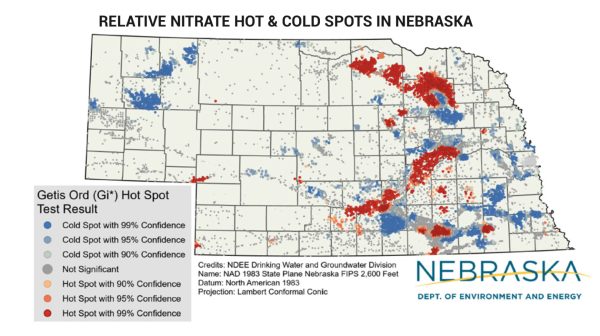
Besides just water treatment, a key long-term solution to water pollution in the state is reforms to agricultural processes. For example, practices like introducing cover crops to absorb excess nitrogen have decreased water contamination in the Central Platte area. Additionally, the 2024 Nitrogen Reduction Incentive Act allows the state to fund farming practices that prevent nitrate pollution.
For now, though, students are doing their part to raise awareness about water pollution through Know Your Well.
“It’s really neat to see science kind of bridge the gap between the classroom and the community,” Dornbos said. “I think that teenagers are capable of doing a lot of good and it doesn’t need to wait until they graduate.”
Citizen Science Program Raises Awareness about Water Pollution © 2025 by Youth Environmental Press Team is licensed under CC BY-NC-ND 4.0. To view a copy of this license, visit https://creativecommons.org/licenses/by-nc-nd/4.0/