








The author is a recent high school graduate from Bellevue, Nebraska.
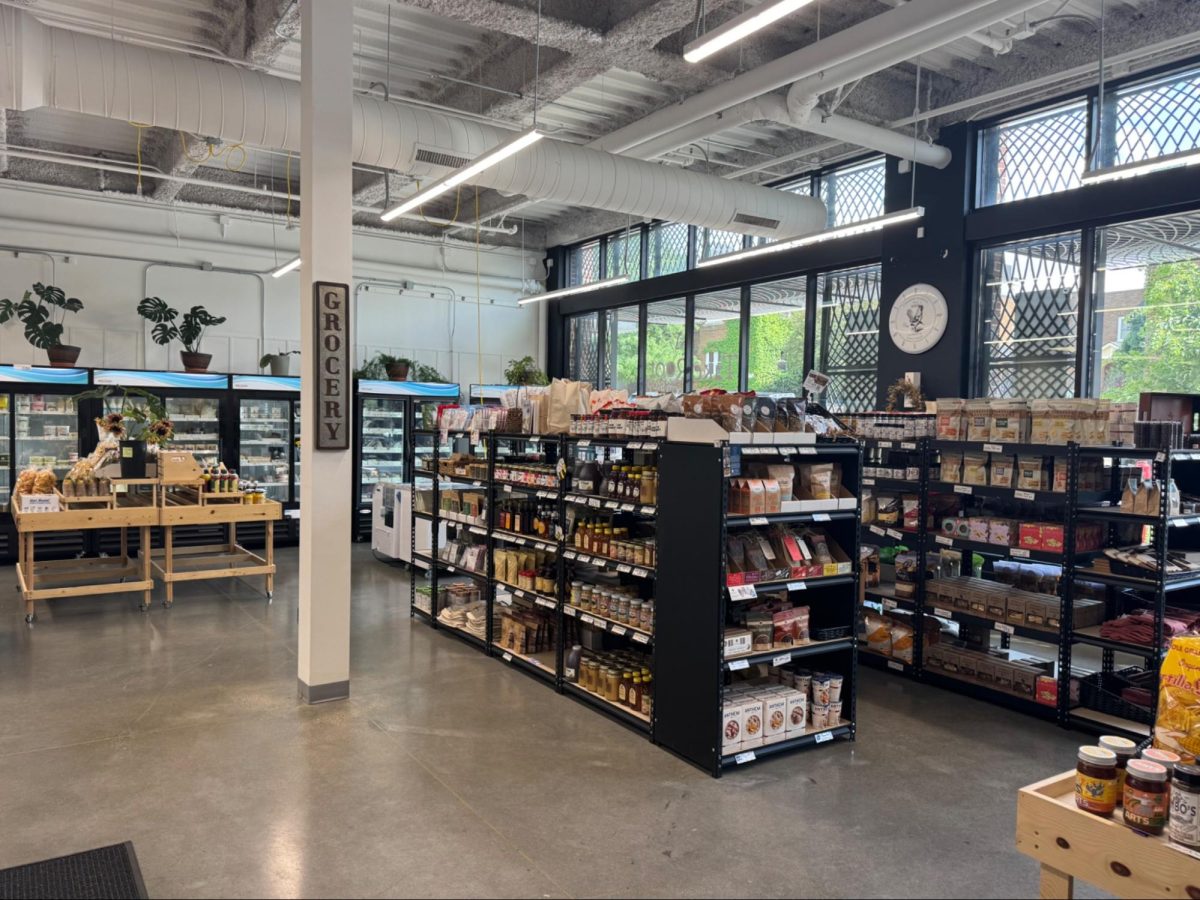
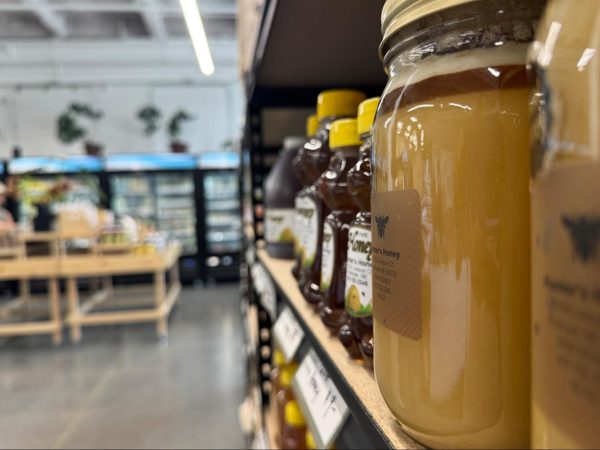
On the outside window, colorful signs depict carrots and stalks of asparagus. Inside, rows of fresh and local food line the walls, offering everything from eggs to lettuce to honey.
This is the scene at TakeRoot Farm Stop in Omaha, Nebraska. TakeRoot Farm Stop was founded in 2025 by farmers Gordon Miller and Matt Johnson and former nonprofit coordinator Carla Gornall. After seeing increased success selling local food at farmers’ markets, Miller, Johnson, and Gornall decided to pursue a year-round model– a farm stop.
“We began to see the potential that a year-round farmers’ market could have for local farmers by providing an additional sales channel and helping extend their selling season,” Gornall said.
TakeRoot sells products from 60 vendors, with a focus on supporting environmentally responsible farmers. Many of the farmers who sell through TakeRoot prioritize organic or regenerative agriculture. For example, Back to Nature Farms in Fremont, Nebraska, sells beef, pork, and chicken raised on a regenerative farm. Dawn and Chad Christianson of Back to Nature Farms say that their agriculture practices mean “working with nature instead of against it”.
“One of the biggest practices we use is adaptive rotational grazing, where our cattle, pigs, and chickens are moved regularly to fresh pasture,” Chad Christianson said. “This allows the grass time to recover… and helps build organic matter while reducing erosion.”
Regenerative agriculture is an alternative to industrial agriculture that erodes soil at high rates and limits biodiversity. Regenerative practices focus on soil, plant, and animal health, as well as limited environmental impact. Some common techniques include limited use of pesticides and use of cover crops in empty fields after harvest season.
“These cover crops keep living roots in the soil, reduce erosion, feed soil microbes, capture nutrients, and provide our cattle with a diverse, nutrient rich diet throughout the colder months,” Chad Christianson said.
The healthy soil created by regenerative agriculture offers significant climate benefits. According to a 2018 study on carbon sequestration, healthy soil can draw carbon dioxide, a major contributor to climate change, out of the atmosphere to be stored naturally underground. Additionally, the reduction of chemical pesticides encourages a biodiverse environment.
“Regenerative agriculture allows us to care for the land today while leaving it healthier for future generations,” Chad Christianson said.
Even for the producers at TakeRoot who don’t adhere to strict regenerative or organic practices, selling food locally reduces the climate impact of their agriculture. Immense amounts of fossil fuels are required for interstate and even international transport of food. Local food travels less than food shipped across long distances, which reduces transportation emissions. Some customers, like Omaha-metro resident Sam Dillon, choose TakeRoot because of these benefits of shopping locally.
“As an environmental scientist, I am well aware of the environmental benefits of shopping locally,” Dillon said. “Supporting local shops can help reduce carbon emissions since the travel of those items would be shortened. Also, in more connected communities, the general public have a larger say in farming techniques and could demand more environmentally-friendly agriculture.”
Gornall also points out that buying from stores like TakeRoot increases transparency within agriculture by allowing customers to connect directly with the farms that provide their food. The Christiansons echo this philosophy.
“Knowing who raises your food and how it is produced gives you a level of transparency and trust that you simply can’t get with most food sold through large supply chains,” Dawn Christianson said. “When you buy directly from a local farm, you can… ask questions about how the animals are cared for, what they eat, and how they are raised.”
Between strengthening the environment and the community, buying local has clear benefits. However, it’s not always easy, as cost and accessibility are barriers for many consumers.
“I admire Take Root’s mission and want to support local vendors like them as much as possible,” Dillon said. “The biggest factors that inhibit my ability to shop locally [are] location and time.”
Gornall encourages people to shop locally whenever they can, noting that even small grocery trips give support to farmers. Farmers receive 70% of the sales from their products at TakeRoot, in contrast to the national average of 6% return for farmers.
“We encourage customers to shop seasonally, when produce is most abundant and affordable, and to buy what fits their budget,” Gornall said. “Every local purchase, no matter the size, helps… the local economy.”
TakeRoot is continuing to expand, inviting new producers to join their system and developing food education programs. These expansions are part of building TakeRoot’s larger mission, which Gornall describes as supporting the environment, local farmers, and community all at once.
“Every purchase at TakeRoot is an investment in local families, stronger communities, and a more resilient regional food system,” Gornall said.
TakeRoot Farm Stop is located 5018 Underwood Ave, Omaha, NE 68132.
“Farm Stops Encourage Year-Round Local Shopping” © 2026 by Youth Environmental Press Team is licensed under CC BY-NC-ND 4.0. To view a copy of this license, visit https://creativecommons.org/licenses/by-nc-nd/4.0/