





The author is a rising sophomore in Wisconsin.
The largest wildlife fundraiser in Wisconsin and one of Wisconsin’s largest fundraisers overall is dedicated to one of the state’s most significant animals: birds. The Great Wisconsin Birdathon is a fundraiser run by the Natural Resources Foundation of Wisconsin that aims to raise money in order to support, preserve and further protect the birds of Wisconsin.
This year, individuals and teams participated in a 24-hour period, anytime from April 15 to June 15, where they logged all of the different species of birds that they observed.
The Birdathon is very flexible in both who participates and where participants can log their observations. Anyone can participate; they don’t have to be a bird expert. To add further convenience, bird species can be logged from any location: parks, backyards, trails or anywhere in between. Participants choose to either donate a one-time flat payment or “pledge” to donate an allotted amount of money for each bird species that they observe.
The 2026 Birdathon aimed to raise $130,000 towards bird conservation and was very successful in doing so, as over $132,000 was raised at the end of the two-month Birdathon period. This year also marks a historical moment for the Great Wisconsin Birdathon, as it reached its 15th anniversary. Since it started in 2012, over $1 million has been raised solely from the Birdathon. These funds have been managed and collected by the Natural Resources Foundation of Wisconsin via the Bird Protection Fund.
The Great Wisconsin Birdathon is not the only time it is important to support Wisconsin’s birds, though. The Save Our Songbirds website discusses the “birds in trouble” in Wisconsin and easy ways to help them at home.
People can add native plants, such as spruce trees, sunflowers, service berry trees and jewelweeds, to their gardens or yards to provide additional food and resources for Wisconsin songbirds.
A simple but effective way to reduce bird deaths is to add protection to windows so that birds will not be as likely to ram into them. Adding external screens, film and markers, window decorations or special “BirdSavers” — thin, minimalist cords hung on the exterior of windows — can greatly benefit the livelihood of songbirds.
Buying bird-friendly coffee or certified organic coffee can help protect bird habitats. Coffee-making plants typically chop down trees and pollute woodland areas, thus destroying the habitats of many birds. Bird-friendly coffee ensures that this is not done at the coffee plants.
The final way that is recommended by the Save Our Songbirds website is to simply keep pets, such as domestic cats, inside, or watch them while they are outside, so that they do not attack birds in backyards.
Although there is still much work to be done, some cities in Wisconsin have already started to implement bird-friendly changes to the metro areas. Dr. Anna Pidgeon, a professor of forest and wildlife ecology at the University of Wisconsin-Madison, states that “A few cities, including Madison and Middleton, have passed ordinances requiring that new construction incorporate glass that is bird-friendly.”
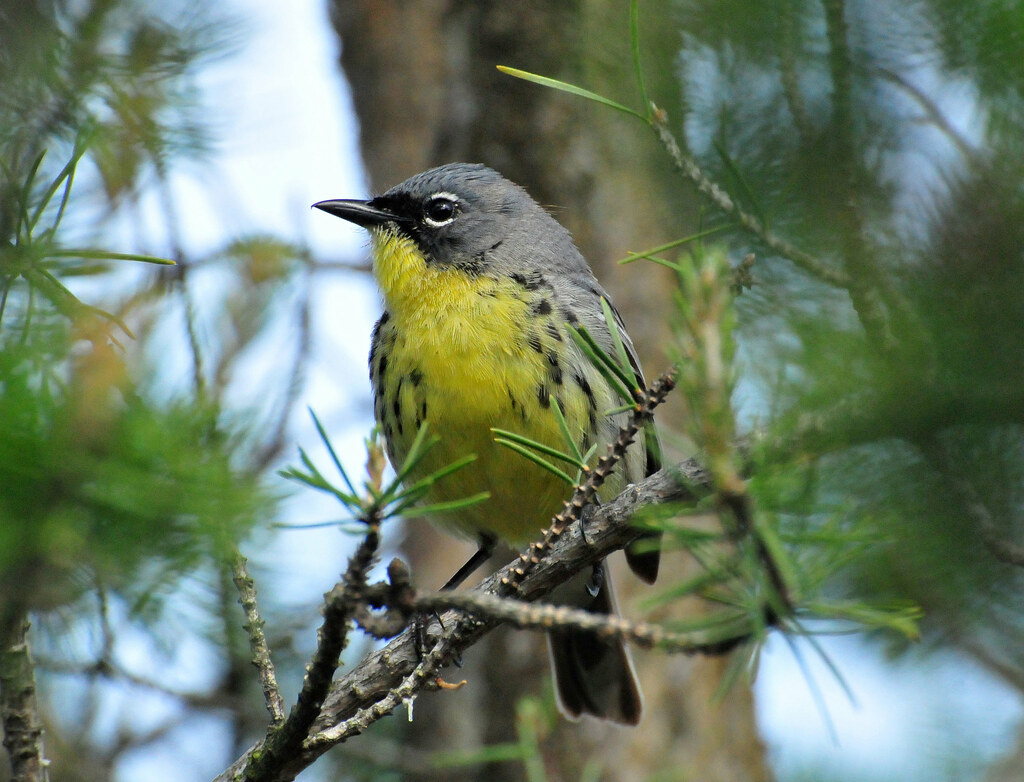
Dr. Pidgeon also discusses how the “vast majority of Wisconsin’s prairies, and grasslands birds are in steep decline” and how this has prompted “long term efforts to maintain nesting habitats and nesting success for rare Wisconsin species like Kirtland’s Warbler and Piping Plover and Whooping Crane,” to name a few.
Similarly, Dr. Pidgeon says that there have been lots of efforts to “ensure that tree species important for wildlife, especially white oak and bur oak, continue to regenerate” because of their large importance as a host species. She mentions that “White oak are the host species for over 500 caterpillar species, and caterpillars are critical food for the nestlings of many forest species,” meaning that without them, much of the bird population that lives in forests would dissipate.
Another thing that Dr. Pidgeon talks about is how, in the past, “frequent fires created the correct conditions” for oak trees to thrive and for acorns to germinate. To mimic this effect in a safer and more controlled way, Wisconsin has many prescribed burns, typically during the early spring months, that clear out dead plants and create more room for oaks.
Although they are effective, some of the bird conservation efforts in Wisconsin are not as accessible and easy to find time to do for many people. For example, prescribed burns are done by professionals and many of the native plant sales take a lot of time due to the long planting, growing, and harvesting seasons. In contrast, the Great Wisconsin Birdathon is super convenient and doesn’t take much time at all. It could take as little as a few seconds to record a bird species seen.
Due to simply the amount of bird-enthusiasts that participate in the Great Wisconsin Birdathon, it ends up being one of the most impactful ways to promote the conservation of birds in Wisconsin.
If it is not possible for someone to participate in the Birdathon, checking out the Save Our Songbirds website for ideas about how to help birds around one’s living space can be a great alternative and a wonderful way to support nature.
The 15th Annual Great Wisconsin Birdathon © 2026 by Youth Environmental Press Team is licensed under CC BY-NC-ND 4.0. To view a copy of this license, visit https://creativecommons.org/licenses/by-nc-nd/4.0/