







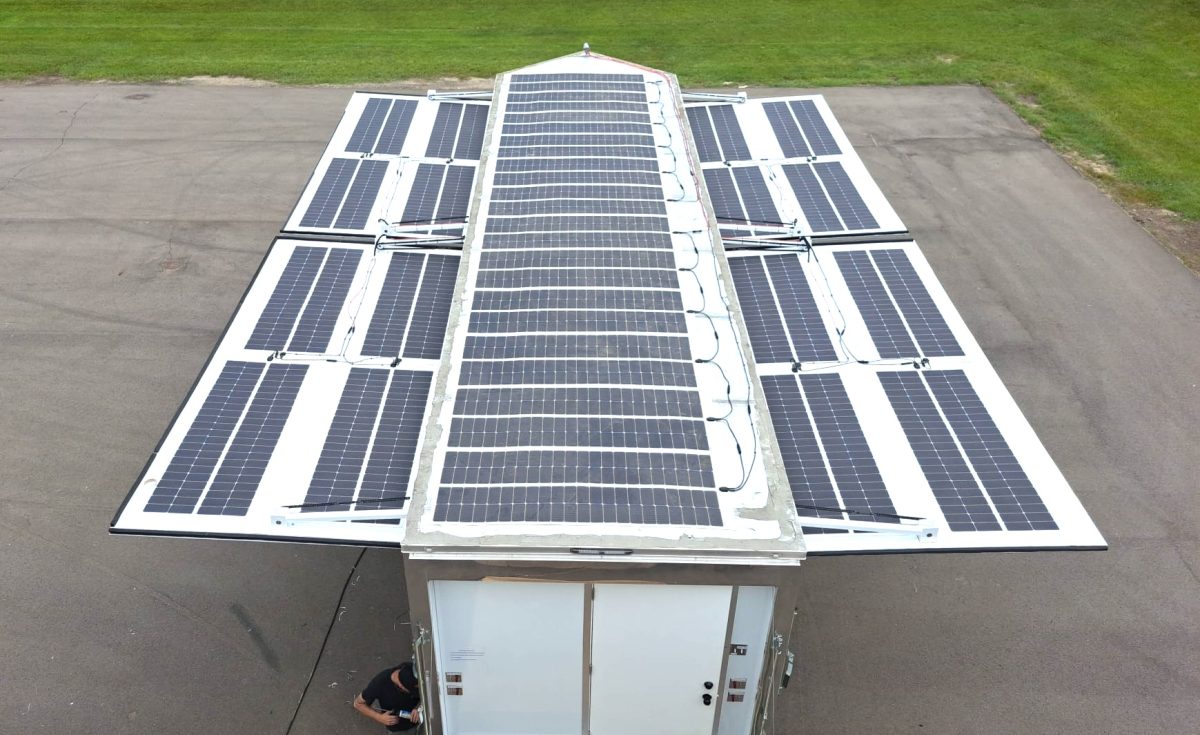
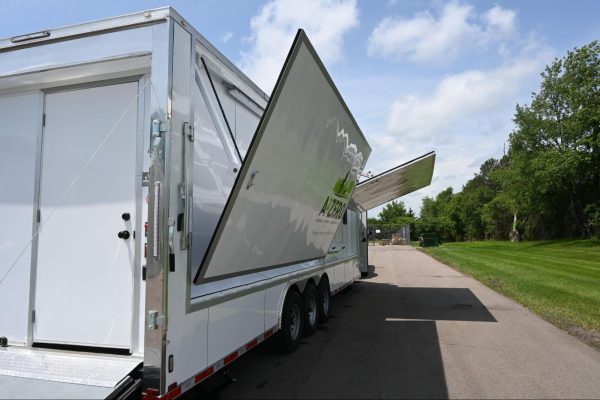
If you are walking around downtown Ann Arbor, Michigan, you may just get the chance to catch a glimpse of the brand new A2ZERO trailer. A project by Ann Arbor’s Office of Sustainability and innovations (OSI), the unit is a portable nano grid, meaning that it is able to operate completely independently through renewable energy usage. The trailer is lined with solar arrays and equipped with small desks and a fridge, thoughtfully set up to provide the best use of physical space.
While currently called the Sesame Solar trailer, after the company in Jackson, Michigan, where it was constructed, a naming competition took place last fall and the OSI team is excited to announce the new title soon.
The unit is just one of Ann Arbor’s many steps to achieve “Community-wide carbon neutrality” by the year 2030.
Energy for the trailer comes from two sources and a battery that stores energy. The first is a system of solar panels. Installed onto the unit’s sides, base and roof, the portable nano grid is well equipped to support the trailer’s function through the power of solar energy.
However, on a rainy or cloud covered day, solar panels may not be the best fit. To combat this difficulty, the unit has a built in hydrogen fuel cell system. According to OSI, deionized water is poured in and the system pulls hydrogen out of the water, forming it into a solid state. That pressure is stored in tanks and is able to charge a fuel cell, which then charges the unit’s battery. This allows the unit to produce its own energy independent of the sun.
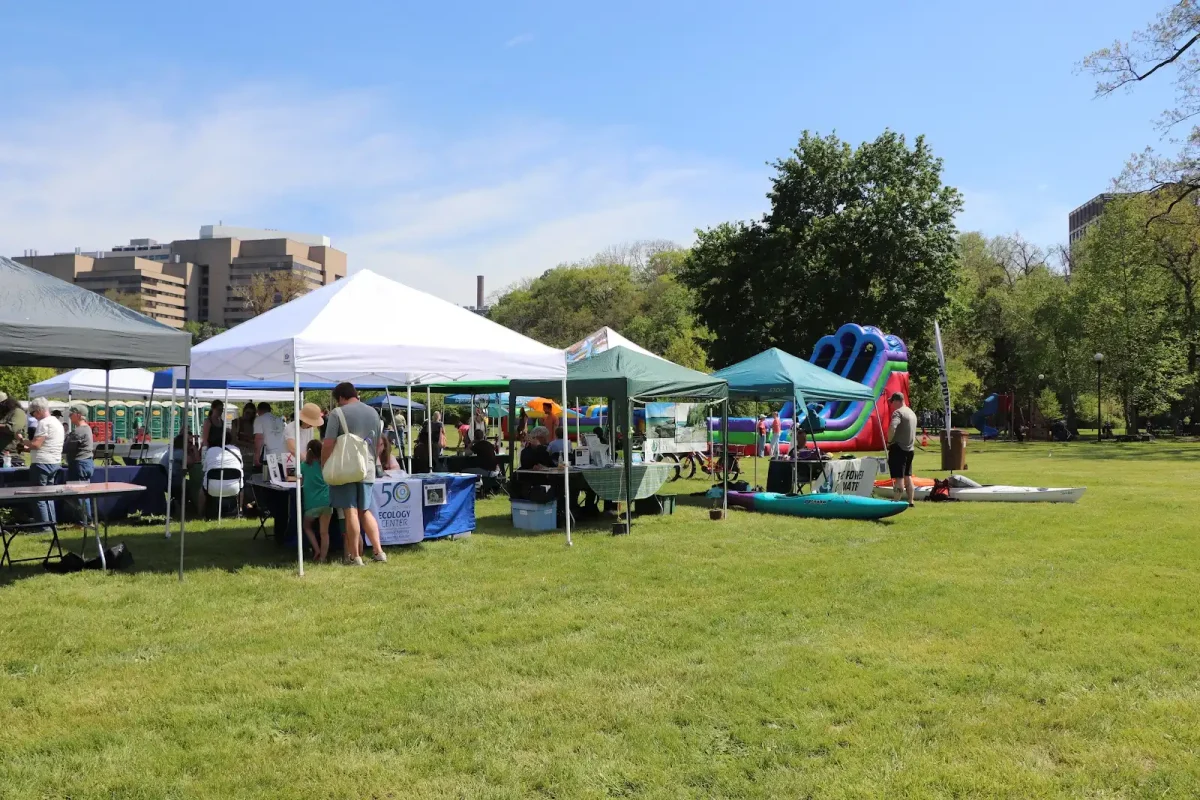
Citizens of Ann Arbor had the opportunity to tour the Sesame Solar trailer during the A2Zero Green Fair, an annual climate event hosted by OSI last fall. This was the unit’s debut and the OSI team saw excitement from community members.
OSI Community Resilience Specialist Bryce Frohlich calls the unit a “Living Learning Lab of sustainability.” Through the unit, citizens learn not just why it is important to take action protecting the climate, but how they can do so.
Frohlich mentions that the trailer has significant potential beyond direct preservation. This allows OSI to educate those interested on the trailer on environmental topics such as the circular economy, sustainable food, the city’s carbon neutrality goals or their many home energy improvement and pilot programs. Through the trailer’s well thought out design, staff can give audio and visual presentations,using the trailer to tell stories.
“We’re hoping that there’s pathways people see themselves in. We can connect them and the unit is just one way.” Frohlich says “It’s up to us to make that engaging and clear to folks.”
The Sesame Solar trailer will also be used as a community decarbonization tool. During events such as the office’s Local Food Fest, the unit could be used to power food trucks instead of the vendors having to bring in diesel generators which harm the environment. The city could then start using this as a renewable source of energy to power community events and have citizens coming together and learning locally.
While still a few years out, the OSI team hopes the trailer could support the community as a disruptor response tool in emergencies such as power outages or extreme weather. The goal would be to hook the trailer up to one of A2Zero’s resilience hubs so they could continue to provide food, mental health and childcare services in the face of disruption, according to Frohlich.
As with all new technology, the OSI staff had to learn how to operate and maintain the Sesame Solar trailer. This was the job of second year Michigan grad student, Meredith King.
While on a fellowship with OSI, King interviewed the different departments within the office to see how they saw themselves using the trailer and what their goals were. The final product was a complete staff engagement guide for OSI to reference.
Although King only worked with the Office of Sustainability for three months, she was able to observe how the group was run. She noticed how frequently the departments overlapped and how supportive the staff were for each other. King was also reminded that things often take longer than you might expect and appreciated OSI’s strive to do things right. The office had originally wanted the trailer to be used in the local food fest last fall but when time fell short, they took a step back in order for the project to have a stronger influence.
“Learning that it’s okay to take things slower in order to have more of a quality outcome [is important],” King says. “I think that is something that OSI did really well. It would have been really easy to throw something haphazardly together, but it wouldn’t have been as impactful.”
While a trailer like OSI’s might not be a fit for every community, OSI staff urge others to get involved in the climate.
“If you’re interested in learning about sustainability you don’t just have to look to a local government.” Frohlich says “We need people who care about sustainability, who care about community and who care about the planet. All of those different pathways are available in tons of different places. It’s just about taking that spirit with you.”
Want to read more about Ann Arbor’s pursuit of renewable energy goals, read here.
Ann Arbor’s new portable nanogrid, Sesame Solar © 2026 by Youth Environmental Press Team is licensed under CC BY-NC-ND 4.0. To view a copy of this license, visit https://creativecommons.org/licenses/by-nc-nd/4.0/