




The author is a high school sophomore at Bellevue East in Bellevue, Nebraska.
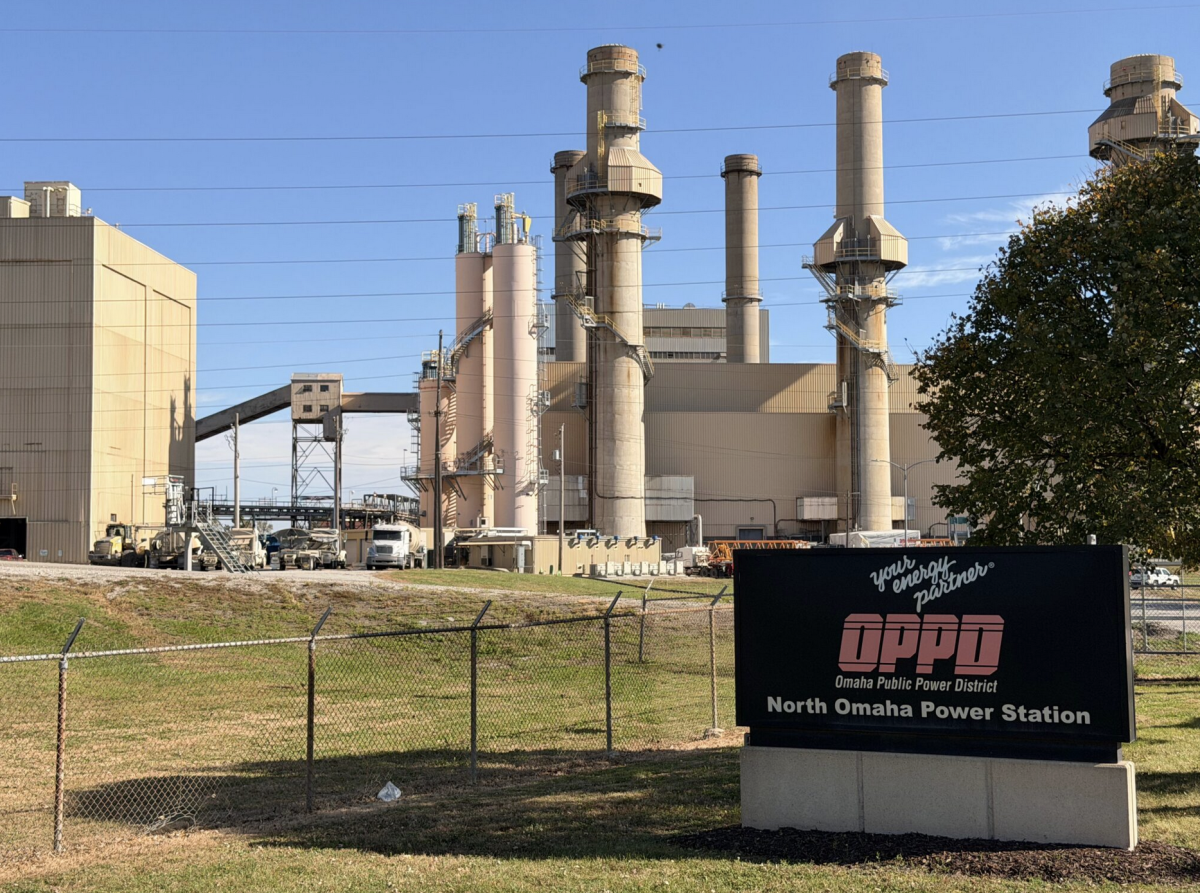
In December 2025, Omaha Public Power District (OPPD) board voted to delay discussion about the retirement of the North Omaha power plant’s last two coal units to natural gas up to 2028.
The decision was previously delayed in 2023 due to additional requirements that needed to be met for the Southwest Power Pool (SPP), the regional transmission grid from which OPPD buys and sells their power. One of the reasons for such delays was that OPPD needed to secure a minimum amount of alternative generation before the retirements to ensure they could still supply enough power to their customers. Despite this, OPPD Vice President of Sustainability & Environmental Affairs Cliff Fleener is optimistic about future decisions.
“It will be transitioned,” Fleener said. “We just need to ensure that we transition our entire fleet to cleaner sources, and take care of adequate baseload generation to support its retirement. We don’t need to have any unnecessary blackouts or excessive risks.”
Despite OPPD officials’ confidence, another thing had stood in the way of the coal-burning units’ retirement. Attorney General Mike Hilgers filed a lawsuit against OPPD on Oct. 9, 2025—later filed for dismissal after OPPD’s decision to delay—stating that OPPD was putting environmental concerns and “political objectives” over their founding mission to provide affordable electricity to Nebraskans. While Hilgers’ team declined an interview, and Fleener declined comment on the subject due to the previous litigation, Lita Magisana, who lives a few streets down from the plant, has frustrations about a lack of action.
“I think we live in a poorer area of town, and I feel that there doesn’t seem to be a threat of gathering to go against the idea [of not retiring the units],” Magisana said. “I just feel like they’re taking advantage of who lives in this area.”
OPPD has a commitment to reaching net zero carbon emissions by 2050, and for Fleener, retiring the coal units is part of the process to this overall goal. As for safety, despite the plant following regulations such as the Clean Air Act since 2003, Douglas County, where the plant is located, had one of the highest asthmatic mortality rates in 2016, according to Nebraska Asthma Coalition. Son of Lita Magisana, River Magisana, sees these kinds of health issues persisting even a decade later in the North Omaha community.
“I’ve noticed that a lot of the people in this area either end up being asthmatic, or they have issues with their breathing, and I believe that is due to the coal and the smoke that is produced from it,” River said.
According to Fleener, the original coal plant was built in 1954 to address increasing energy needs, but that coal plants are rarely constructed today because of their harmful emissions. These trends are in line with OPPD’s plans for energy moving forward.
“We’re not going to build any more coal plants,” Fleener said. “Any eventual replacements will be natural gas.”
Although OPPD has plans to submit approval to SPP for decommissioning the units, the decision to actually retire it has an uncertain future, and there is also some uncertainty about what can be done within the North Omaha community. To River, encouraging better conditions in the area through community action regarding the plant is even an unseen thing.
“I don’t really notice a lot of community action,” River said. “I think part of that is just having grown up in the area, you become accustomed to it. But also I think it’s a general lack of knowledge on how harmful the coal plant could be to you and your loved ones if you live in this area.”
River also noted the area’s low income rates, with many already living paycheck to paycheck and making it harder to congregate. Lita agreed, saying that many people in the area are likely just not aware or able to stand up to concerns. She places the responsibility in the higher-ups making these decisions to put first those that cannot themselves partake in the issue.
“If you’re looking to have a productive city, and a productive state, and not have to ‘help people’,” Lita said, “then it takes in mind that you have to put in the effort to look to their health and economy, and then in the long run, putting in that effort will become a profit.”
Retirement of North Omaha Coal Units Faces Setbacks © 2026 by Youth Environmental Press Team is licensed under CC BY-NC-ND 4.0. To view a copy of this license, visit https://creativecommons.org/licenses/by-nc-nd/4.0/